
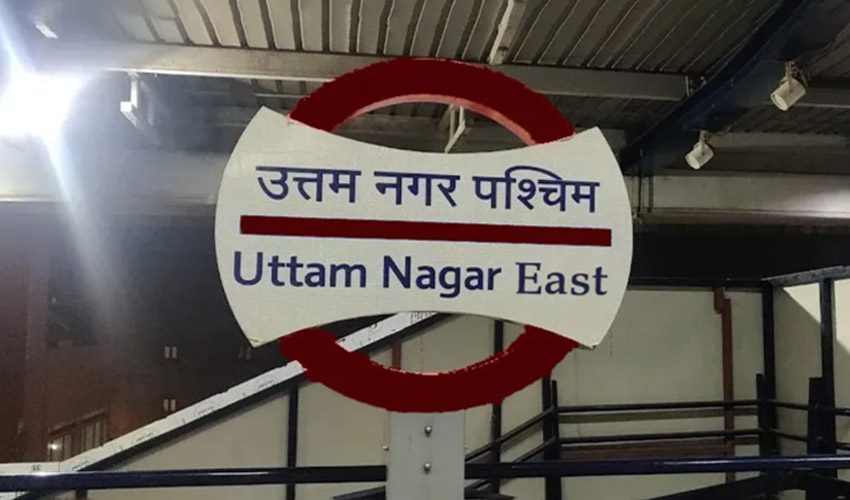
In the heart of West Delhi’s bustling urban landscape, Uttam Nagar East Metro Station stands as a crucial node in the sprawling Delhi Metro network. Located on the Blue Line of the Delhi Metro, this station exemplifies the city’s efforts to build an efficient mass transit system that reduces travel time, improves connectivity, and enhances the daily commute for millions of residents. With its strategic location on Najafgarh Road in the densely populated Uttam Nagar area, the station has become an indispensable part of local life since its inauguration at the end of 2005.
A Brief History
Uttam Nagar East Metro Station was officially opened to the public on December 31, 2005, as part of the Phase I extension of the Delhi Metro. This expansion extended the Blue Line from Dwarka Sub City towards the Barakhamba Road corridor, serving to link residential hubs of West Delhi with commercial and business centers across the capital.
The introduction of the station brought a significant improvement in connectivity for residents of Uttam Nagar and surrounding neighborhoods. Prior to its operation, commuters often relied heavily on congested surface transport, facing long travel times and the challenges of Delhi’s notorious traffic. With the metro’s arrival, travel became faster, more reliable, and less dependent on road conditions.
Location and Urban Context
Situated at A-62/3, Chatrapati Shivaji Marg, Block D, JJ Colony, Uttam Nagar, New Delhi – 110059, Uttam Nagar East lies along one of West Delhi’s key arterial roads. The station is strategically placed to serve several densely populated residential colonies including Indra Park, Jivan Park, Bindapur, and Vikaspuri, as well as commuters heading to Janakpuri.
The area surrounding the station is a vibrant mix of residential blocks, small businesses, shopping markets, and educational institutions. Its location on Najafgarh Road gives it excellent road connectivity, linking passengers to major routes across the city and enabling seamless last-mile travel via buses, auto-rickshaws, and e-rickshaws.
Station Structure and Facilities
Uttam Nagar East Metro Station is an elevated station with two side platforms, allowing trains to run in both directions along the Blue Line—towards Noida Electronic City/Vaishali on one side, and Dwarka Sector 21 on the other.
The station’s architecture reflects the standardized design of many Delhi Metro elevated stations: broad platforms, clear signage, and accessible infrastructure that supports large passenger volume. Modern facilities are in place to ensure commuter comfort and convenience, including:
- Escalators and elevators for ease of movement between levels
- Ticket vending machines and customer care counters
- CCTV surveillance and security checks to ensure passenger safety
- Restrooms and seating areas
- ATMs and small kiosks for refreshments
- Parking spaces for vehicles and two-wheelers in the vicinity
The station is designed to be divyang (differently-abled) friendly, with features such as ramps and dedicated lifts that make travel accessible to all commuters.
Connectivity and Commuter Experience
The Blue Line is one of the busiest corridors in the Delhi Metro network, connecting West Delhi with East Delhi and the National Capital Region (NCR). Through this line, Uttam Nagar East passengers can reach major interchanges like Rajouri Garden, Karol Bagh, and Kashmere Gate, facilitating access to Yellow, Red, and Violet metro lines.
For daily commuters, the station offers direct access to significant employment zones, educational institutions, and commercial centers. Many students, office workers, and shoppers use this station as their primary transit point due to its seamless connectivity and frequent train services. During peak hours, the Blue Line trains typically run at short intervals, helping to manage heavy passenger flow.
When leaving the station, commuters have multiple options for last-mile connectivity. DTC buses operate on routes synchronized with metro timings, while auto-rickshaws, cycle rickshaws, taxis, and app-based ride services like Uber and Ola are readily available outside the exits.
Integration with Urban Life
Beyond being a transport hub, Uttam Nagar East Metro Station has stimulated economic and social activity in its surroundings. Small retail businesses, eateries, coaching centers, and local markets have flourished near the station entrances, benefiting from the high footfall.
The station’s presence has also influenced real estate values in the area. Properties within walking distance of the metro are often more sought after, as residents value the reduced dependence on road transport and the ease of accessing other parts of the city. The metro’s reliability has become a strong factor in residential and rental decisions for many families and young professionals.
In recent years, improvements in pedestrian infrastructure have sought to enhance commuter safety and accessibility. Proposals for new skywalks linking the metro station to nearby facilities such as the DTC bus terminal aim to streamline movement and reduce road crossing hazards. These developments underscore the continuing importance of integrating the metro station’s functionality with broader urban design.
The Role in Modern Delhi’s Transport Network
The Delhi Metro has been instrumental in transforming urban mobility in the NCR, and Uttam Nagar East is a testament to this long-term vision. As one of the earlier stations on the Blue Line, it paved the way for expanded metro connectivity that today spans over 400 kilometers with multiple lines and interchanges. Though the station itself was established in 2005, its relevance has only grown as Delhi’s population and transit demands have increased.
For many residents in West Delhi, the metro is not merely a commute option—it is a lifeline that connects individuals to opportunities, education, and essential services across the city. Stations like Uttam Nagar East exemplify how public transport infrastructure can fundamentally shape the way cities function and how people move within them.
Conclusion
Uttam Nagar East Metro Station is more than just a stop on the Delhi Metro’s Blue Line; it is a thriving urban hub that supports the rhythm of daily life in one of Delhi’s most dynamic neighborhoods. Its enduring value lies in its ability to offer quick, reliable connectivity while supporting the economic vibrancy and social mobility of the local community. As Delhi continues to expand its metro network and integrate multimodal transport solutions, stations like Uttam Nagar East will remain central to the city’s sustainable transit future.
 Admin
Admin