
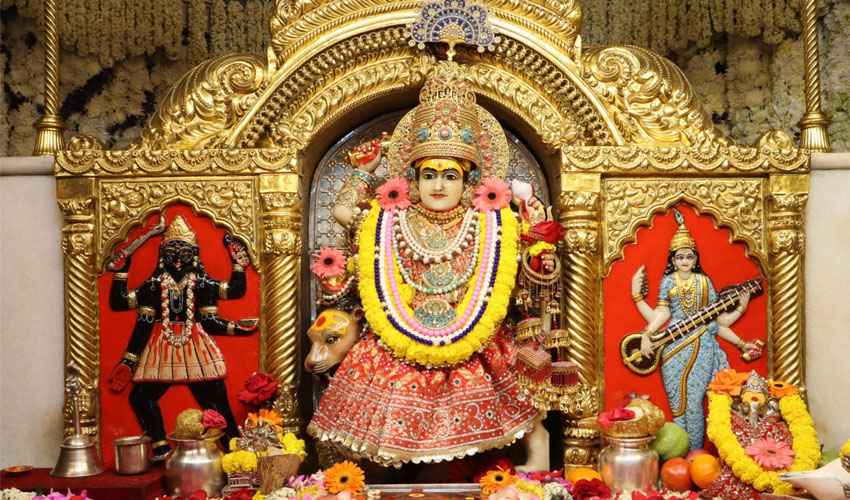
Nestled in the heart of India’s bustling capital city, Jhandewalan Mandir stands as one of Delhi’s most revered Hindu shrines, drawing devotees and visitors from all walks of life. Dedicated to Jhandewali Mata — a powerful manifestation of Goddess Durga — this temple occupies a sacred space in the spiritual and cultural landscape of Delhi. Its name, legends, architecture, festivals, and continual worship rituals reflect centuries of devotion, myth, and urban tradition in the city.
A Shrine Born from a Dream
The origins of Jhandewalan Mandir are steeped in divine mystery and faith. According to traditional lore, a devout cloth merchant named Badri Bhagat had a vivid dream in which the Goddess appeared to him, instructing him about a sacred idol buried under the ground. Guided by this vision, he began to dig at the specified spot near what is now Jhandewalan Road — and to his astonishment uncovered an image of the Goddess.
This self-manifested (swayambhu) idol was placed in a sanctified area beneath the current temple floor and worshipped as “Gufa Wali Mata” — the Goddess of the Cave. Over time, a larger temple complex was constructed above this original site. The temple came to be known as Jhandewalan (literally meaning “place of flags”) because devotees traditionally offered prayer flags (jhanda) here as tokens of devotion and for seeking blessings.
Today, the original idol remains enshrined at the sanctum sanctorum below ground level, while the upper level houses a beautifully adorned idol of Mata Jhandewali, flanked by other divine figures such as Saraswati and Kali, symbolizing divine feminine power in its multifaceted forms.
Location and Accessibility
Jhandewalan Mandir is situated on Jhandewalan Road in the Karol Bagh area of North Delhi, not far from the busy commercial and residential centers of the city. Its location makes it easily accessible by public transport, including the Delhi Metro — with the Jhandewalan Metro Station on the Blue Line being the closest stop — and by a network of buses, autos, and taxis from across Delhi.
The temple complex sits in an otherwise urban setting — surrounded by markets, offices, and bustling streets — yet stepping inside its gates instantly brings a sense of calm and spiritual focus.
Spiritual Significance and Beliefs
For devotees, Jhandewalan Mandir is more than a historic structure — it is a living center of faith where countless prayers are offered for protection, prosperity, peace of mind, and fulfillment of wishes. The deity here is believed to be a powerful form of Maa Adi Shakti — the primal energy and motherly force behind the universe.
The act of offering a jhanda (flag) to the Goddess carries special significance. Traditionally, devotees promise to offer a flag once their wishes are fulfilled, symbolizing devotion, gratitude, and an ongoing connection with the divine.
Temple Architecture and Layout
Though set in an urban locale, Jhandewalan Mandir’s architecture reflects traditional Hindu temple styles with intricate idol placements, carved pillars, and sanctified spaces designated for various deities. The structure is layered:
- Lower Level (Sanctum Ground): Houses the original self-manifested idol of Gufa Wali Mata, believed to be as old as the temple’s inception.
- Upper Level: The more elaborately adorned shrine where the main idol of Mata Jhandewali is worshipped along with idols of Saraswati, Kali, and other deities.
- Adjunct Shrines: Within the complex, devotees can offer prayers in smaller shrines dedicated to other gods like Shiva, creating a holistic space for diverse forms of worship.
Inside, the atmosphere is filled with the rhythmic sound of bells, the fragrance of incense, and the hum of bhajans (devotional songs), which contribute to a deeply spiritual ambiance that many visitors describe as profoundly peaceful.
Rituals and Daily Practices
The temple follows a structured schedule of aarti (ritual prayers) and offerings throughout the day. While timings can vary slightly by season, the general observances include:
- Mangal Aarti — early morning (around sunrise).
- Shringar Aarti — late morning, a time for offerings like milk, coconut, and chane.
- Bhog Aarti — midday, where meals are offered to the Goddess.
- Evening and Night Aartis, marking continued devotion until temple closing.
The temple opens early in the morning and remains accessible until late evening or night, with extended hours during special occasions and festivals. Durga Puja, Navratri, and other festival days see significantly increased participation, with the temple decorated with lights and flowers, and long queues of devotees gathering for blessings.
Festivals and Celebrations
Navratri — the nine-night festival dedicated to the Goddess Durga — is the highlight of the temple’s yearly calendar. During both Chaitra (spring) and Sharad (autumn) Navratris, thousands of devotees throng the temple for special pujas, aartis, and cultural programs. The air resonates with devotional songs, and offerings are made in abundance as families and pilgrims seek the Mother Goddess’s grace.
In addition to Navratri, Durga Puja and Diwali celebrations add vibrancy to the temple’s ritual calendar, marking festive peaks in the spiritual life of the shrine.
Cultural and Social Role
Beyond its religious importance, Jhandewalan Mandir plays an active role in community initiatives. The managing temple society conducts charitable activities, such as free food distribution, and supports educational and training programs for women and youth — underlining the temple’s role as a social as well as spiritual institution in Delhi.
Conclusion: A Living Legacy
Jhandewalan Mandir stands as both a testament to India’s deep spiritual traditions and the dynamic role those traditions continue to play in an ever-changing urban world. Its roots in legend, its living rituals, and its ability to draw devotees of all ages and backgrounds make it one of Delhi’s most iconic temples dedicated to the divine feminine energy. Whether you visit for spiritual solace, cultural interest, or historical curiosity, the temple promises an experience steeped in timeless devotion.
 Admin
Admin