
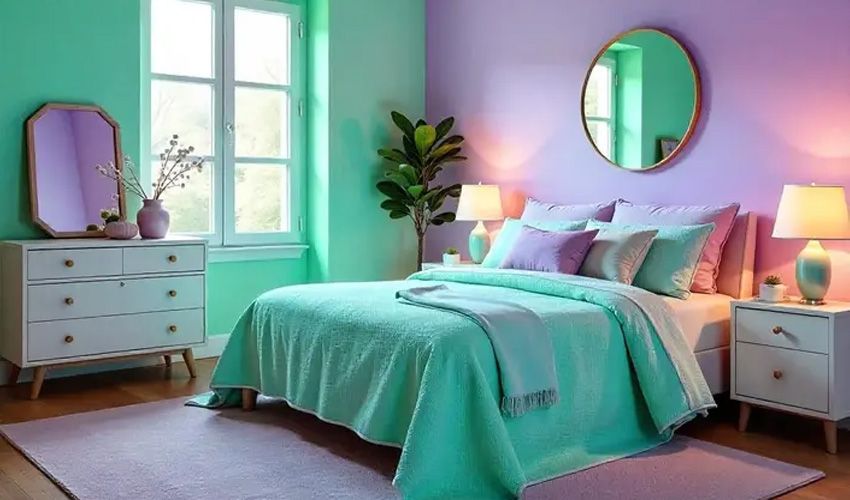
Choosing the perfect bedroom wall colour combination is more than just picking shades you like. According to interior designers, colours influence mood, sleep patterns, and even how spacious or cozy a bedroom feels. A well-planned colour combination can transform an ordinary bedroom into a calm retreat or a stylish personal sanctuary. In this guide, we’ll share practical, designer-approved tips to help you choose the best bedroom wall colour combinations for comfort, style, and long-term appeal.
1. Start with the Mood You Want to Create
Interior designers always begin with one key question: How do you want your bedroom to feel? Bedrooms are meant for rest, so calming and soothing colour combinations usually work best.
- For relaxation: Soft blues, pastel greens, lavender, beige, and warm whites
- For warmth and comfort: Earthy tones like terracotta, taupe, muted browns, and peach
- For a modern luxury feel: Grey with white, navy with cream, or charcoal with blush
Deciding the mood first helps narrow down colour choices and prevents visual clutter.
2. Use the 60-30-10 Colour Rule
Designers often follow the 60-30-10 rule to maintain balance:
- 60% – Dominant wall colour (main bedroom walls)
- 30% – Secondary colour (accent wall or adjacent walls)
- 10% – Accent shade (through décor, cushions, artwork, or trims)
For example, a bedroom can have light beige walls (60%), olive green accent wall (30%), and gold or wooden décor accents (10%). This rule ensures harmony without overwhelming the space.
3. Choose Light Colours for Small Bedrooms
If your bedroom is small or has limited natural light, interior designers strongly recommend lighter wall colour combinations. Light shades reflect light better, making the room feel open and airy.
Best combinations for small bedrooms:
- White and soft grey
- Cream and pastel blue
- Light peach and off-white
- Pale green and beige
Avoid using dark colours on all four walls in compact rooms. Instead, limit them to one accent wall.
4. Accent Walls Add Character Without Overpowering
Accent walls are a designer favorite. They allow you to experiment with bold or dark colours without making the bedroom feel heavy.
Popular accent wall ideas:
- Navy blue wall behind the bed with light grey side walls
- Deep green accent wall paired with warm white walls
- Textured wallpaper in neutral tones with solid colour walls
Accent walls work best behind the headboard as they naturally draw attention and add depth.
5. Consider Natural and Artificial Lighting
Lighting plays a huge role in how wall colours appear. Interior designers always test colours under different lighting conditions before finalizing.
- Bedrooms with lots of sunlight: Cool shades like blue, grey, or green balance the warmth
- Low-light bedrooms: Warm shades like ivory, cream, soft yellow, or blush work better
Also check how the colour looks under night lighting, as some shades appear darker or dull after sunset.
6. Match Wall Colours with Furniture and Flooring
A common mistake homeowners make is choosing wall colours without considering existing furniture and flooring. Designers suggest creating a cohesive palette.
- Dark wood furniture: Pair with light walls like cream, beige, or pastel tones
- Light wood or white furniture: Grey, muted blue, or sage green works beautifully
- Marble or tile flooring: Neutral wall colours prevent the room from feeling cold
Your walls should complement, not compete with, your furniture.
7. Use Neutral Colours as a Safe Base
Neutral colour combinations are timeless and designer-approved. They work across styles and are easy to update with décor changes.
Classic neutral combinations include:
- White and grey
- Beige and taupe
- Cream and soft brown
Neutrals are perfect if you prefer flexibility and want to refresh your bedroom look without repainting frequently.
8. Avoid Overly Bright or Stimulating Colours
Interior designers generally advise against very bright or intense colours in bedrooms. Shades like bright red, neon yellow, or electric orange can overstimulate the mind and affect sleep.
If you love bold colours, use muted versions:
- Replace red with terracotta or wine
- Replace bright yellow with mustard or soft gold
- Replace neon shades with dusty or pastel tones
Subtlety is key when designing a restful bedroom.
9. Vastu-Friendly Colour Choices for Indian Homes
For Indian households, designers often incorporate Vastu Shastra principles while selecting bedroom wall colours.
- Master bedroom: Light blue, beige, pastel green, or lavender
- Children’s bedroom: Soft yellow, green, or peach
- Avoid: Dark black, deep red, or bright orange for sleeping areas
Balanced, soothing colours are believed to promote positivity and harmony.
10. Test Before You Commit
One of the most important tips from interior designers is to always test paint samples. Colours can look very different on walls compared to small swatches.
Paint a small section of the wall and observe it:
- In daylight
- Under artificial lighting
- At different times of the day
This simple step can save time, money, and disappointment.
11. Keep Trends Secondary to Comfort
While it’s tempting to follow trends, designers recommend prioritizing comfort and longevity. Trendy colours like deep charcoal or bold jewel tones are best used in moderation.
Timeless combinations ensure your bedroom remains stylish for years without frequent makeovers.
12. Balance Warm and Cool Tones
A well-designed bedroom often blends warm and cool tones for visual balance. For instance:
- Cool grey walls with warm wooden furniture
- Soft blue walls with beige or cream accents
This balance creates a cozy yet fresh atmosphere.
Final Thoughts
Interior designers believe that the best bedroom wall colour combination is one that aligns with your lifestyle, space, and emotional needs. By considering room size, lighting, furniture, and personal comfort, you can create a bedroom that feels peaceful, stylish, and inviting. Thoughtful colour combinations not only enhance aesthetics but also improve well-being, making your bedroom a true place of rest.
 Suman Gupta
  Sanjay Mishra
  Girish