
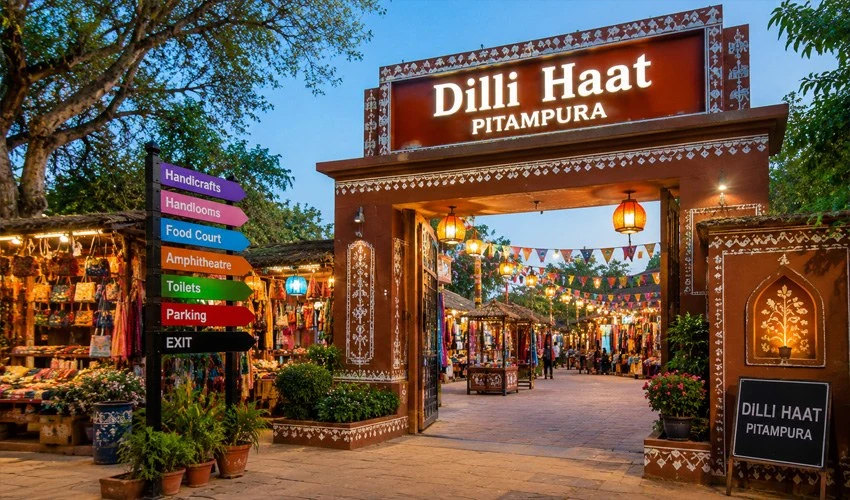
Tucked away near the Netaji Subhash Place Metro Station in North-West Delhi, Dilli Haat Pitampura stands as a vibrant celebration of India’s handicrafts, cuisine, and cultural diversity. While its older sibling in INA gets most of the tourist attention, this Pitampura branch has quietly built a loyal following among Delhiites who want the same open-air bazaar experience without fighting South Delhi traffic. Whether you’re a first-time visitor to the capital or a long-time resident looking for a weekend outing, this guide covers everything you need to know before you go.
What Is Dilli Haat Pitampura?
Dilli Haat Pitampura is an open-air complex that brings together traditional Indian handicrafts, regional cuisine, and cultural performances under one roof — or rather, under one sprawling, landscaped campus. It was developed by the Delhi Transport and Tourism Development Corporation (DTTDC) and opened to the public in 2008, following the runaway success of the original Dilli Haat in INA, South Delhi. The idea was simple: give artisans from across the country a regulated, rotating platform to sell their crafts directly to buyers, cutting out middlemen and giving shoppers access to authentic regional products at fair prices.
Spread across roughly 7.2 acres, the Pitampura complex is considerably larger than its INA counterpart. It houses around 108 stalls, a food court representing multiple Indian states, an amphitheatre with a capacity of about 450 people, three air-conditioned halls for exhibitions and events, and a terrace garden with generous landscaped areas. Unlike a permanent retail market, the stalls here rotate periodically, so artisans from different states get a fair chance to showcase their work, and returning visitors often find something new each time.
Location and How to Reach
Dilli Haat Pitampura is located on Ring Road, directly opposite Netaji Subhash Place and near the Wazirpur Bus Depot, close to the well-known TV Tower landmark in Pitampura. This makes it one of the most metro-accessible tourist and shopping spots in Delhi.
- Nearest Metro Station: Netaji Subhash Place (Red Line), just a short walk from the complex gate — arguably one of the easiest last-mile connections of any Delhi attraction.
- Other Nearby Stations: Kohat Enclave, Shakurpur, Keshav Puram, and Shalimar Bagh are all within a couple of kilometres.
- By Road: The market sits right on Ring Road, making it easy to reach by car, auto-rickshaw, or cab from most parts of Delhi and Gurugram or Noida via the ring road network.
- By Bus: Several DTC bus routes stop near Netaji Subhash Place and Wazirpur Depot, both a short walk from the entrance.
- Parking: A basement parking facility accommodates around 250 four-wheelers along with space for two-wheelers, which is a relief in an area that otherwise gets congested.
If you’re travelling from South or West Delhi and don’t want to deal with distance, remember there’s also a Dilli Haat in Janakpuri; but Pitampura’s direct metro connectivity often makes it the more convenient option for those living in North or Central Delhi.
Timings and Entry Fee
Dilli Haat Pitampura is open all seven days of the week, so you don’t need to plan around a particular weekday.
- Timings: 11:00 AM to 10:00 PM, daily
- Entry Fee: Rs. 20 per adult (children typically pay a lower or nominal fee; it’s worth checking at the counter since rates can be revised)
Because it’s open until 10 PM, it makes for a pleasant evening plan — the string lights, the cooler evening air, and the smell of food from a dozen different regional kitchens create an atmosphere that’s hard to replicate indoors.
What Makes It Worth Visiting
1. Authentic Regional Handicrafts
The stalls at Dilli Haat Pitampura are allotted on a rotational basis to artisans and craftspeople from different Indian states, so the mix of products keeps changing throughout the year. On any given visit, you might find:
- Hand-block printed textiles from Rajasthan and Gujarat
- Pashmina shawls and woollens from Kashmir and Himachal Pradesh
- Wooden and bamboo handicrafts from the Northeast
- Terracotta pottery, brassware, and metal crafts from Uttar Pradesh and Bihar
- Ethnic jewellery, embroidered garments, and home décor pieces from across the country
Because these are artisans selling directly rather than through retail chains, prices tend to be more reasonable than in mall boutiques — though a bit of polite bargaining is still part of the culture here, just as it is at INA.
2. A Genuine Food Trail
The food court is one of the biggest draws. Stalls represent cuisines from multiple states, so you can realistically sample Rajasthani dal-baati, South Indian dosas, Bengali fish preparations, North-Eastern momos, and Punjabi classics all in a single visit — a food-hopping experience that would otherwise require crossing half the country. It’s an easy, low-effort way to introduce kids or out-of-town guests to India’s culinary range without booking multiple restaurant reservations.
3. Cultural Performances and Events
The on-site amphitheatre regularly hosts folk dance performances, music shows, and cultural programs, especially around festivals. Combined with the exhibition halls, the venue is also used for seminars, workshops, and community events, giving it a dual identity as both a shopping destination and a cultural venue.
4. Festival-Season Specials
Like Delhi’s other Haats, Pitampura sees a noticeable uptick in activity and stall variety around festivals such as Teej, Raksha Bandhan, Diwali, and Karwa Chauth, when special theme-based fairs and additional stalls are often set up. If your visit coincides with one of these periods, you’ll likely see a livelier, more festive version of the regular market.
Tips for a Better Visit
- Best time to visit: Evenings, particularly during the cooler months from September through December, when Delhi’s weather is more comfortable for an open-air outing.
- Carry cash: While many stalls now accept UPI and card payments, smaller vendors may still prefer cash, so keep some on hand.
- Bargain politely: Prices at handicraft stalls aren’t always fixed; a friendly negotiation is normal and expected, especially for bulk purchases.
- Wear comfortable footwear: The complex is large, and you’ll likely be walking and standing for a couple of hours.
- Check for events beforehand: If you’re specifically interested in a cultural performance or festival fair, it helps to check ahead, since these aren’t scheduled every single day.
- Combine with nearby spots: The Pitampura TV Tower and Netaji Subhash Place’s commercial hub are both close by if you want to extend your outing.
Dilli Haat Pitampura vs. Dilli Haat INA
It’s worth knowing the difference before you plan your trip, since Delhi actually has three Dilli Haats — INA, Pitampura, and Janakpuri.
- Dilli Haat INA, opened in the early 1990s, is the original and remains the most well-known, with a larger and more consistently active stall count of around 60 handicraft stalls and 25 food stalls, open daily from 10 AM to 10 PM.
- Dilli Haat Pitampura, opened in 2008, is physically larger in total area, with a bigger food court and event infrastructure, but its stall activity and special markets tend to be more concentrated around festival periods.
- Dilli Haat Janakpuri, the newest of the three, opened in 2014 and serves West Delhi residents.
If you live in North-West Delhi or want easy metro access without heading into South Delhi, Pitampura is the more convenient choice. If you’re after the most consistently bustling handicraft-shopping experience with the widest daily stall variety, INA still tends to have the edge.
Who Should Visit?
Dilli Haat Pitampura works well for:
- Families looking for an affordable half-day or evening outing with food and light entertainment
- Shoppers hunting for authentic, reasonably priced regional handicrafts and home décor
- Photography enthusiasts drawn to its colourful stalls, string lights, and landscaped grounds
- Out-of-town visitors who want a quick, single-location introduction to India’s craft and culinary diversity
- Office groups or event planners interested in booking the amphitheatre or exhibition halls for functions
Final Thoughts
Dilli Haat Pitampura may not carry the same historic cachet as the original INA market, but it more than holds its own with a bigger footprint, strong metro connectivity, and a genuinely enjoyable mix of shopping, food, and culture. At just Rs. 20 for entry and with hours stretching into the evening, it’s one of Delhi’s most accessible and budget-friendly ways to spend a few hours exploring the country’s artisanal heritage — all without leaving the city. Whether you’re picking up a hand-woven shawl, sampling a plate of Bengali fish curry, or simply soaking in the atmosphere under the evening lights, Dilli Haat Pitampura delivers a slice of India’s cultural diversity in one convenient North Delhi location.