
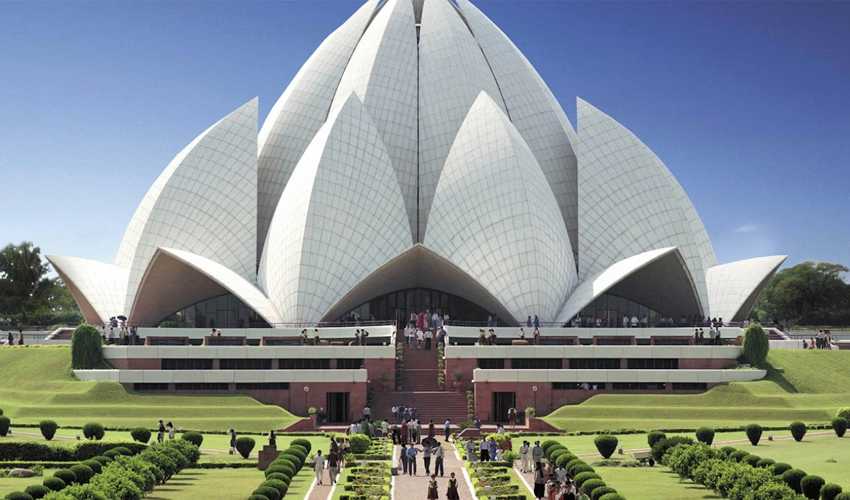
The Lotus Temple, one of the most iconic landmarks of New Delhi, is admired worldwide for its striking lotus-shaped architecture and serene atmosphere. Millions of visitors—regardless of religion, nationality, or belief—walk through its white marble petals every year. While most people commonly refer to it as the Lotus Temple, its official identity is the Bahá’í House of Worship. This naturally raises an important question: Why is the Lotus Temple called the Bahá’í Temple?
To understand this, we need to explore the Bahá’í Faith, its principles, and how the Lotus Temple represents its spiritual philosophy.
Understanding the Bahá’í Faith
The Bahá’í Faith is a relatively young world religion that originated in the mid-19th century in Persia (modern-day Iran). It was founded by Bahá’u’lláh, whom Bahá’ís believe to be the latest Messenger of God in a long line that includes figures such as Krishna, Buddha, Moses, Jesus Christ, and Prophet Muhammad.
At its core, the Bahá’í Faith teaches the oneness of humanity, the oneness of God, and the oneness of religion. It emphasizes unity over division, encouraging harmony between people of different races, cultures, and faiths. Rather than rejecting other religions, the Bahá’í Faith sees them as part of a single, progressive spiritual journey of humankind. Because of this inclusive worldview, Bahá’í places of worship are designed not for one community alone, but for all people.
Also Read: How to Reach Mahabaleshwar Temple from Delhi
What Is a Bahá’í House of Worship?
Bahá’í temples around the world are known as Houses of Worship, and they follow specific architectural and spiritual principles laid down in Bahá’í writings.
Some key features of every Bahá’í House of Worship include:
- Nine sides or entrances, symbolizing completeness and unity
- Open access to people of all religions
- No idols, images, or clergy-led rituals inside
- A focus on prayer, meditation, and reflection
The Lotus Temple is one of only a few Bahá’í Houses of Worship across the globe, making it not just an architectural wonder, but also a deeply symbolic religious structure.
Why the Name “Bahá’í Temple”?
The Lotus Temple is called a Bahá’í Temple because:
- It was built by the Bahá’í community of India
- It serves as an official Bahá’í House of Worship
- It reflects Bahá’í spiritual principles, not those of any other religion
Although visitors from all backgrounds are welcome, the temple’s spiritual foundation, purpose, and ownership belong to the Bahá’í Faith. The prayers read inside often come from Bahá’í scriptures, as well as sacred texts of other religions—another reflection of Bahá’í inclusiveness. So, while “Lotus Temple” describes its appearance, “Bahá’í Temple” describes its religious identity.
Why a Lotus Shape?
One of the most fascinating aspects of the temple is its lotus-inspired design. The lotus flower holds deep spiritual significance in Indian culture and across many Eastern religions. It symbolizes purity, peace, enlightenment, and rebirth, as it rises unstained from muddy waters.
The Bahá’í Faith encourages using culturally meaningful symbols in architecture to connect with local communities. When the temple was planned in India, architect Fariborz Sahba chose the lotus to resonate with Indian spiritual traditions while remaining consistent with Bahá’í principles.
Importantly, the lotus is not a religious symbol exclusive to the Bahá’í Faith. Instead, it was selected as a universal emblem that communicates unity and spirituality without favoring one religion over another.
No Idols, No Rituals—Only Prayer
Unlike temples of many other religions, the Lotus Temple does not contain idols, statues, or ceremonial altars. There are no priests, sermons, or prescribed rituals. Silence and simplicity define the interior.
This aligns perfectly with Bahá’í teachings, which emphasize a direct connection between the individual and God. The absence of religious imagery ensures that people of all beliefs can feel comfortable praying or meditating according to their own faith or conscience. This unique approach is one reason the temple attracts people who may not identify with any religion at all.
A Symbol of Unity, Not Conversion
A common misconception is that the Lotus Temple aims to convert visitors to the Bahá’í Faith. In reality, proselytizing is not allowed inside Bahá’í Houses of Worship. The temple exists to inspire spiritual reflection, not religious debate.
The Bahá’í Faith strongly believes that unity cannot be achieved through coercion or superiority of belief. By welcoming everyone equally, the Lotus Temple demonstrates this philosophy in action. This universal openness further explains why the structure is known as a Bahá’í Temple—it practices Bahá’í values through experience rather than instruction.
Also Read: Jhandewalan Mandir: The Famous Durga Temple in Delhi
Global Importance of the Lotus Temple
The Lotus Temple is often called one of the most visited religious buildings in the world. Its global recognition has made it a symbol not only of Delhi, but also of the Bahá’í Faith’s commitment to peace and unity.
Just as the Bahá’í Houses of Worship in places like Haifa, Sydney, and Santiago reflect local culture, the Lotus Temple reflects India—while still remaining unmistakably Bahá’í in purpose and philosophy.
Conclusion
The Lotus Temple is called the Bahá’í Temple because it is an official House of Worship of the Bahá’í Faith, built to embody its teachings of unity, equality, and universal spirituality. While its lotus shape gives it a memorable and culturally resonant identity, its soul lies in Bahá’í principles that transcend religious boundaries.
In essence, the Lotus Temple is more than a monument—it is a living expression of the belief that humanity, despite its diversity, is one family. And that is precisely why it proudly bears the name Bahá’í Temple.