
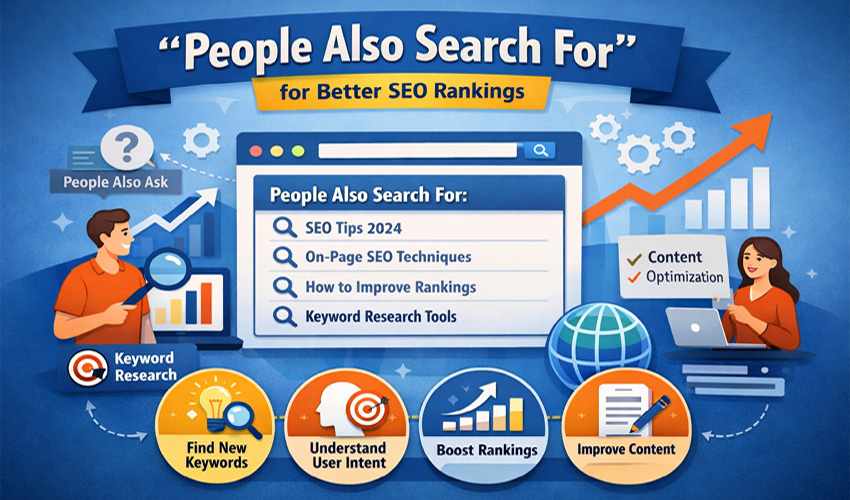
Search engine optimization (SEO) is constantly evolving, and staying ahead requires understanding how users search and how search engines respond. One powerful yet often underutilized feature is “People Also Search For” (PASF). If used strategically, PASF can unlock new keyword opportunities, improve content relevance, and boost your rankings significantly.
In this article, you’ll learn what “People Also Search For” is, why it matters, and how to use it effectively to improve your SEO performance.
What is “People Also Search For” (PASF)?
“People Also Search For” is a feature displayed by search engines (especially Google) that shows related queries users often search after visiting or leaving a particular webpage.
You’ll typically see PASF:
- After clicking a search result and then returning to the search page
- As a dropdown suggestion box under a listing
These suggestions reflect real user behavior, making them extremely valuable for SEO research.
Why PASF Matters for SEO
PASF is not just a suggestion tool—it’s a window into search intent and user psychology. Here’s why it’s important:
1. Reveals User Intent
PASF helps you understand what users are really looking for beyond their initial query.
2. Expands Keyword Opportunities
It provides related keywords you might not find through traditional keyword tools.
3. Improves Content Depth
By incorporating PASF queries, you can create more comprehensive content.
4. Boosts Rankings
When your content aligns with multiple related queries, it increases your chances of ranking higher.
How to Find “People Also Search For” Keywords
1. Use Google Search Manually
- Search for your main keyword
- Click on a result
- Hit the back button
- Observe the PASF suggestions
2. Use SEO Tools
Tools like Ahrefs, SEMrush, and Ubersuggest often include PASF-like suggestions.
3. Analyze Competitor Pages
Look at top-ranking pages and identify related queries they target.
Step-by-Step Strategy to Use PASF for SEO
Step 1: Start with a Primary Keyword
Choose a main keyword relevant to your niche.
Example:
“SEO tips for beginners”
Step 2: Collect PASF Suggestions
After performing a search, gather all PASF suggestions.
Example PASF results:
- SEO tips 2026
- On-page SEO techniques
- SEO checklist
- How to rank website fast
Step 3: Group Keywords by Intent
Organize PASF keywords into categories based on search intent:
- Informational: Learn something
- Navigational: Find a website
- Transactional: Take action
This helps structure your content effectively.
Step 4: Optimize Your Content
Now integrate PASF keywords naturally into your content:
1. Use in Headings
Include PASF queries as H2 or H3 headings.
2. Add to FAQ Section
Create a FAQ section using PASF questions.
3. Expand Content Sections
Add new sections covering related queries.
Step 5: Improve Internal Linking
Link related pages on your website using PASF keywords as anchor text. This helps search engines understand your content structure.
Step 6: Create Supporting Content
Use PASF keywords to build topic clusters.
Example:
Main topic: SEO tips
Supporting topics:
- On-page SEO guide
- Technical SEO basics
- Keyword research methods
Practical Example of PASF Optimization
Let’s say you’re writing an article on:
“Digital Marketing Strategies”
PASF Suggestions Might Include:
- Digital marketing examples
- Types of digital marketing
- Online marketing strategies
- Digital marketing tools
How to Use Them:
1. Add Sections:
- Types of Digital Marketing
- Best Digital Marketing Tools
2. Include FAQs:
- What are digital marketing strategies?
- Which tools are best for beginners?
3. Optimize Meta Tags:
- Use PASF keywords in title and description.
Advanced PASF SEO Techniques
1. Combine PASF with “People Also Ask” (PAA)
Use both features to cover a wider range of user queries.
2. Focus on Long-Tail Keywords
PASF often reveals long-tail keywords that are easier to rank for.
3. Update Old Content
Refresh existing articles by adding PASF keywords.
4. Use in Voice Search Optimization
Many PASF queries are conversational—perfect for voice search.
Common Mistakes to Avoid
1. Keyword Stuffing
Avoid overusing PASF keywords unnaturally.
2. Ignoring Search Intent
Don’t just add keywords—match the intent behind them.
3. Copying Competitors Blindly
Use PASF insights creatively instead of duplicating content.
4. Not Updating Content
SEO is dynamic—keep updating your content regularly.
Best Practices for Using PASF
- Focus on quality over quantity
- Use natural language
- Prioritize user experience
- Keep content well-structured
- Monitor performance using analytics tools
Tools to Enhance PASF Research
While PASF itself is a Google feature, you can enhance your research using:
- Google Search
- Google Trends
- AnswerThePublic
- Ahrefs
- SEMrush
These tools help validate and expand PASF insights.
How PASF Improves Content Strategy
Using PASF allows you to:
- Build topic authority
- Increase organic traffic
- Reduce bounce rate
- Improve user engagement
It also helps you create content that answers multiple related queries in one place, making your page more valuable.
PASF and Content Clustering
Content clustering is a powerful SEO technique where you create a main pillar page supported by related content.
PASF plays a key role here by:
- Identifying cluster topics
- Suggesting internal linking opportunities
- Enhancing topical relevance
Measuring the Impact of PASF
Track the success of your PASF strategy using:
- Organic traffic growth
- Keyword rankings
- Click-through rate (CTR)
- Bounce rate
- Time on page
If these metrics improve, your PASF strategy is working.
Future of PASF in SEO
As search engines become more AI-driven, features like PASF will become even more important. They reflect real user journeys, which is exactly what search engines aim to optimize.
SEO is no longer just about keywords—it’s about understanding user behavior, and PASF is a direct insight into that.
Conclusion
“People Also Search For” is one of the most powerful yet underrated tools in SEO. It provides real-time insights into user intent, helps discover new keyword opportunities, and allows you to create more comprehensive and relevant content.
By strategically incorporating PASF into your SEO workflow—through keyword research, content optimization, and internal linking—you can significantly improve your search rankings and drive more organic traffic.
If you’re serious about SEO success, don’t ignore PASF. Start using it today to build smarter, more effective content that truly matches what users are searching for.
 Dianna
  Girish