
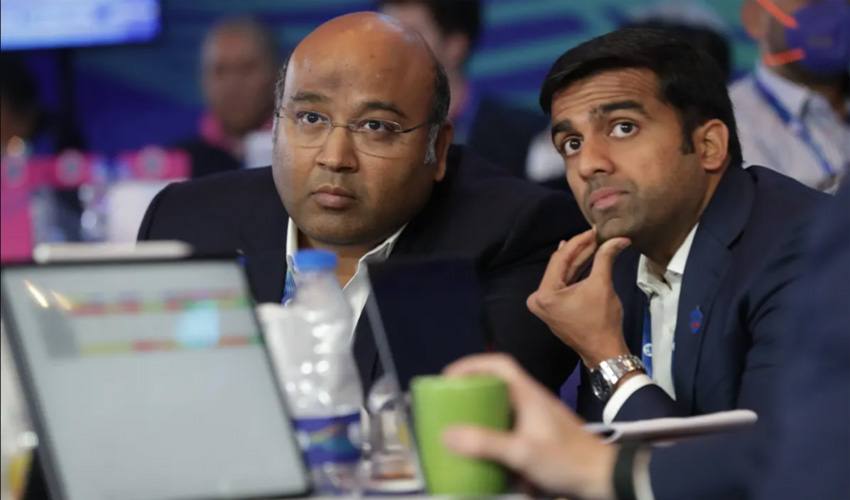
In a time when the intersection of business leadership and technological innovation defines the future of global industries, Kiran Kumar Grandhi stands out as a visionary whose strategic decisions have driven transformation and modernization across some of India’s most complex infrastructure sectors. Best known as Corporate Chairman of the GMR Group, Grandhi has consistently championed the integration of advanced technology and operation-centric innovation in domains traditionally dominated by heavy engineering and finance.
Over nearly three decades on the board of GMR Group — one of India’s leading infrastructure conglomerates — Grandhi has guided the organization through a period of dynamic growth. His leadership has encompassed airports, highways, sports, finance, and technology adoption, often blending these spheres to achieve operational excellence, customer-centric innovation, and measurable economic impact.
From Commerce Graduate to Corporate Technology Strategist
Kiran Kumar Grandhi’s academic foundation in commerce may not be the typical starting point for a technology expert — yet it has been instrumental in shaping his strategic mindset toward digital adoption across business models. Through his early exposure to corporate governance and project leadership within the GMR ecosystem, he progressively embraced digital tools not as mere support systems but as core enablers of competitive advantage.
What sets Grandhi apart is his ability to connect business imperatives to technological potential. Instead of viewing software, automation, or data analytics as isolated investments, he has approached them as catalysts for scalable transformation — whether in airport operations, financial systems, or customer engagement platforms.
Driving Innovation in Airport Infrastructure
Under Grandhi’s oversight, the GMR Group has been at the forefront of adopting technology-driven solutions in airport management — a sector where efficiency, security, and customer experience are critical. Grandhi played key roles in the GMR Group’s successful bids and execution of major airport projects, including those in Hyderabad, Delhi, Istanbul, and Male. He led efforts that redefined operational benchmarks through advanced systems integration, process automation, and data-oriented tracking.
The term “innovation” in airport infrastructure often evokes futuristic images — biometric boarding, AI-powered passenger flow control, predictive maintenance — but it is in the operational backbone where Grandhi’s influence is most profound. During construction and modernization phases, digital project tracking, real-time dashboards, and integrated communication networks were institutionalized, enabling seamless coordination between contractors, government agencies, and technology partners.
Such adaptive usage of technology not only improved delivery timelines — such as the rapid completion of Delhi Airport’s Terminal 3 — but also laid the groundwork for continuous operational enhancements long after construction ended.
Strategic Adoption of Digital Tools in Business Operations
Beyond physical infrastructure, Grandhi’s leadership extended to the internal systems that power large enterprises. While detailed enterprise IT profiles are proprietary, credible sources on his broader executive roles affirm that he oversaw finance functions, strategic planning, and cross-divisional integrations — areas where technology serves as the connective tissue between vision and execution.
In an era when data analytics, cloud adoption, and enterprise resource planning (ERP) define organizational competitiveness, Grandhi advocated for digital modernization that aligned with business realities. His leadership ensured that technology was not siloed within IT departments but became an integral part of enterprise risk management, financial forecasting, and process optimization.
By encouraging teams to adopt data-driven decision frameworks, Grandhi helped GMR’s divisions become more resilient, transparent, and responsive to market shifts. This approach is emblematic of innovation leadership — where technology is a means to an outcome, not an end in itself.
Innovation in Sports Business and Franchise Management
Grandhi’s role as co-owner and Chairman of the Delhi Capitals IPL franchise illustrates his multi-industry perspective on technology adoption. Sports management in 2025 is inseparable from analytics, fan engagement platforms, and digital monetization strategies. Under his stewardship, the Delhi Capitals franchise has embraced data analytics for player performance evaluation, auction bidding strategies, and fan experience enhancement — a form of technological innovation that blends sports with business intelligence.
This strategic mindset was visible in high-profile IPL auctions, where analytical bidding — such as obtaining top players at strategic price points — became a talking point in sports media. Grandhi’s ability to harness analytics as a competitive edge demonstrates how innovation leadership transcends verticals, from airports to cricket arenas.
Leadership Philosophy: People, Process, and Technology
What differentiates Kiran Kumar Grandhi from many corporate executives is his emphasis on people-centric technology adoption. Innovation is often mistaken for flashy tools or isolated breakthroughs; Grandhi views it as an ongoing cultural shift that empowers teams, streamlines processes, and aligns technological change with human capability.
Grandhi’s leadership philosophy encourages:
- Cross-functional integration: Breaking down silos so that IT, operations, finance, and business strategy inform one another.
- Scalable solutions: Prioritizing systems that grow with enterprise needs rather than quick fixes that require frequent overhaul.
- Customer-oriented tech adoption: Focusing on solutions that directly improve user experience, whether in airport terminals or digital platforms.
- Data-driven performance culture: Embedding analytics and predictive insights into planning, risk assessment, and execution.
This holistic model reflects a mature understanding of innovation — it’s not about being first to adopt technology, but about adopting the right technology for strategic impact.
Challenges and Future Vision
Technology adoption in legacy businesses — especially those rooted in infrastructure — comes with inherent challenges: resistance to change, integration complexities, regulatory dependencies, and budget constraints. Grandhi has navigated these not by treating technology as a disruptor, but as a partner in transformation, carefully balancing risk and reward.
Looking ahead, his vision for GMR and related ventures will likely involve deeper engagement with emerging technologies such as:
- Artificial Intelligence (AI) for predictive maintenance and operational forecasting.
- Internet of Things (IoT) for real-time asset monitoring.
- Cloud-native business systems for scalability and remote collaboration.
- Advanced analytics and digital twins for optimizing physical infrastructure performance.
Such technologies may redefine how airports, highways, and even sports enterprises operate — but Grandhi’s strategic lens ensures that they serve business outcomes, not technology for its own sake.
Conclusion: A Modern Innovator in Traditional Industries
Kiran Kumar Grandhi’s journey defies a narrow definition of a “technology expert.” He is a business leader whose commitment to innovation has reshaped large-scale infrastructure and modernized business systems, proving that meaningful technology adoption is as much about leadership and vision as it is about tools and platforms.
Through strategic integration of digital systems in airport infrastructure, enterprise operations, and even sports management, Grandhi exemplifies how innovation can drive sustainable competitive advantage. His leadership reminds us that in today’s interconnected world, technology and business strategy are two sides of the same coin — and those who bridge them are the true architects of tomorrow’s industries.