
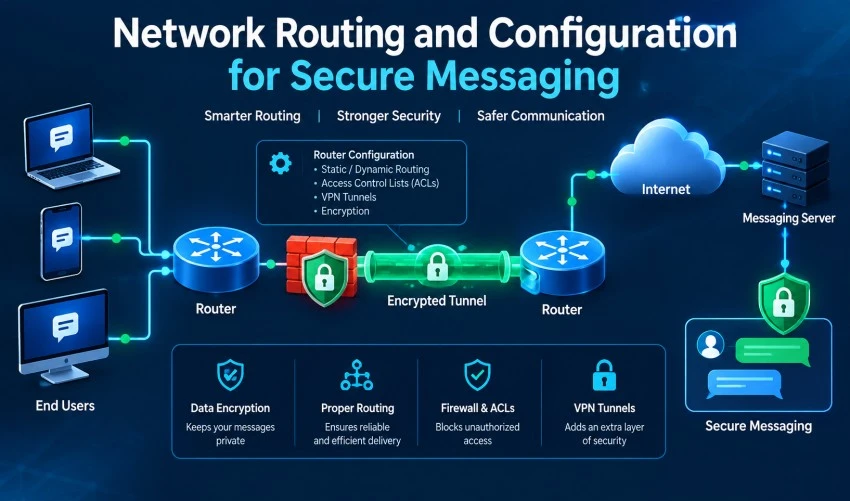
Messaging platforms require stable internet connectivity to deliver data packets efficiently. Network operators frequently implement filtering mechanisms to block specific domains or restrict access to certain communication protocols. Users rely on intermediate routing nodes to bypass these artificial barriers and maintain uninterrupted access to their digital correspondence. An intermediate server receives encrypted requests from the client application and forwards them to the final destination. The destination server registers the internet protocol address of the intermediate node instead of the actual physical location of the user. This masking process provides a robust layer of privacy against local network surveillance.
Differences between transport layer standards
The choice of communication protocol directly impacts the stability and security of the connection. The application natively supports two distinct routing standards. The SOCKS5 protocol is a universal standard that routes traffic between a client and server through a local firewall. It operates at the session layer and supports various types of traffic including the user datagram protocol. This flexibility makes it highly suitable for automated scripts and external software integrations. However, standard SOCKS5 traffic is easily identifiable by deep packet inspection algorithms. Firewalls can detect the characteristic packet headers and terminate the session instantly.
Developers created the MTProto protocol specifically for the internal architecture of this messaging platform. This custom protocol minimizes network overhead by reducing the size of cryptographic headers. The reduced payload size ensures rapid delivery of short text messages even on unstable cellular networks. The protocol includes a masking feature called Fake-TLS. This mechanism wraps the data stream in standard cryptographic protocols to simulate regular web browsing traffic. Network administrators analyzing the data flow see only standard encrypted interactions with random web domains. A reliable telegram proxy based on this technology can bypass aggressive filtering systems without triggering automated security alerts.
Infrastructure requirements for stable communication
Server infrastructure quality determines the overall user experience. Publicly available connection nodes suffer from severe bandwidth limitations due to the massive influx of concurrent users. These overloaded servers frequently drop packets and cause noticeable delays in message delivery. Voice calls and video streaming require a stable channel with low latency and consistent packet delivery. Professional network providers allocate dedicated bandwidth to individual users to prevent these performance bottlenecks. Datacenter connections offer symmetrical gigabit speeds perfectly suitable for heavy media consumption.
Mobile connectivity provides the highest level of trust from automated security systems. Cellular network operators use network address translation to route thousands of smartphones through a single external address. Blocking one of these addresses would disconnect thousands of legitimate users. Automated bot networks avoid datacenter internet protocol addresses because platforms blacklist known hosting providers rapidly. Administrators managing multiple communication channels prefer mobile routing solutions with automatic address rotation to mimic natural user behavior and avoid algorithmic penalties.
 Girish