
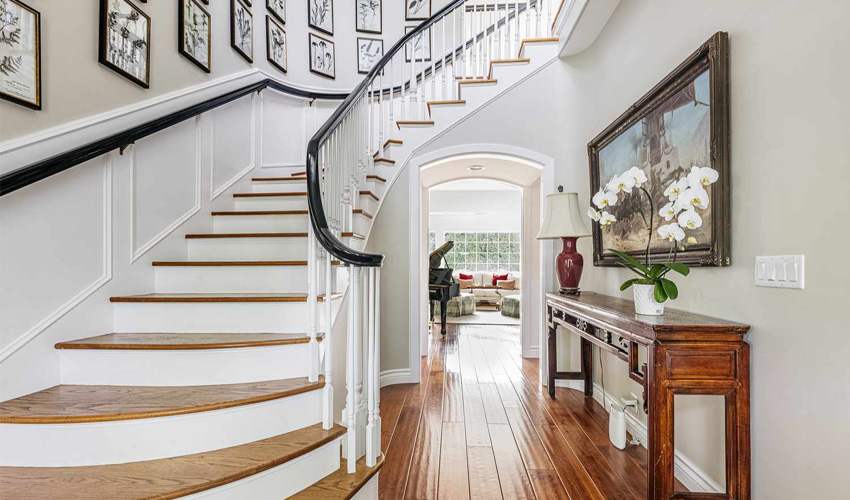
Staircases are no longer just functional elements in a home — they’ve become architectural statements. In 2025, stair design continues to balance aesthetics, safety, and innovation. From ultra-minimalist floating stairs to nature-inspired curves, here’s a look at the top 10 staircase designs that are defining modern homes.
1. Floating Glass Staircases: Sleek & Transparent
Perhaps the most futuristic look you can add to your home, floating glass staircases blend form and function. Clear tempered glass treads paired with invisible fasteners create a sense of space and light that traditional stairs cannot match.
Why they’re trending in 2025:
- Maximum light penetration — helps small or narrow spaces feel larger.
- Works beautifully with contemporary, minimalist, or high-end interiors.
- Glass panels can be combined with thin metal stringers for extra strength and style.
Best in homes with: Modern design, open floor plans, high ceilings.
Tips: Use anti-slip glass treads and LED lighting beneath each step for safety and dramatic effect.
2. Floating Wood Steps with Hidden Supports
Bringing warmth to minimalist design, solid wood floating steps anchored invisibly into a wall offer a clean, dramatic look. These are perfect for homes where both design and coziness matter.
Why they’re in demand:
- Natural wood complements a variety of interiors — from Scandinavian to rustic modern.
- Creates an illusion of levitation without compromising strength.
- Works well with glass railings or open spaces.
Design idea: Pair walnut or oak steps with matte black railings for a modern industrial feel.
3. Spiral Staircases: Compact & Sculptural
Spiral staircases remain a favorite for homeowners who want style and space efficiency. In 2025, designers are pushing the envelope with sculptural helix forms and mixed materials.
What’s new this year:
- Organic shapes, asymmetric spirals.
- Metal frames with contrasting wood or stone steps.
- Integrated lighting within the spiral for safer navigation.
Why choose spiral stairs:
- Ideal for homes with limited square footage.
- Acts as a sculptural centerpiece and conversation starter.
4. Cantilevered Staircases: The Illusion of Flight
Cantilevered stairs seem to float out of walls, held by hidden structural supports. This design channels a strong modern vibe while maintaining a clean look.
2025 twist:
Combining cantilevered treads with mirrored risers or reflective wall panels enhances the perception of space.
Great for:
Ultra-modern homes, lofts, gallery-style interiors.
Design tip: Pair with recessed side lighting to accentuate the floating effect.
5. Helical Staircases: Organic Curves & Luxury
If spiral stairs are bold, helical staircases are elegant — open curves without a central pole create a luxurious and sweeping movement across floors.
Signature traits:
- Soft curves that flow like a ribbon.
- Often crafted with custom balustrades (metal, wood, glass).
- Smooth, continuous form feels inviting.
Best in homes with:
Double-height living rooms or dramatic entrances.
6. Industrial Style Metal & Timber Mix
Industrial design is going strong in residential spaces. A staircase that blends raw metal framing with warm wood steps strikes the perfect balance of rugged and refined.
Trend highlights:
- Matte black or gunmetal-finished steel frames.
- Exposed joints and rivets for character.
- Complementary elements like brick walls or concrete floors.
Bonus: Metal bases can be paired with open risers to make compact spaces feel airier.
7. LED-Illuminated Steps: Functional Art
Lighting isn’t just an add-on — it’s a defining feature. In 2025, staircases increasingly incorporate LED lighting built into treads, risers, or under rails to combine safety with statement design.
How it transforms staircases:
- Soft under-step lighting for nighttime safety.
- Color-changing LEDs for dynamic interiors.
- Can be integrated with smart home systems.
Best for:
Contemporary homes, tech-savvy interiors, and night-friendly layouts.
8. Nature-Inspired Wooden Spiral Trees
Nature meets architecture in stair designs that resemble organic forms like trees, vines, or branches. These create a dramatic focal point while remaining functional.
Key features:
- Central support column resembling a tree trunk.
- Steps branch outward like limbs.
- Often paired with natural stone or indoor plants.
Why it’s trending:
Biophilic design — connecting interiors to nature — continues to grow in popularity.
9. Traditional With a Twist: Classic Elegance, Modern Details
Not all homes want ultra-modern lines. Classic staircase designs get a fresh update in 2025 with subtle contemporary tweaks.
Examples:
- Traditional banisters with slim metal balusters.
- Curved wooden steps with minimalist newels.
- Warm wood tones offset with matte black accents.
Why this works:
It bridges timeless elegance with contemporary sensibilities — perfect for transitional homes.
10. Smart Staircases: Integrated Technology & Storage
Function meets innovation with staircases that do more than move you between floors. Smart staircases incorporate storage, tech, and adaptability.
Features to watch:
- Staircase drawers or cabinets built into steps.
- LED step lighting with motion sensors.
- Hidden charging ports or sound systems along railings.
Future-forward idea:
Smart sensors that adjust lighting and guide users at night, especially handy for kids and elders.
Tips for Choosing the Right Staircase Design
Selecting a staircase isn’t just about looks. Here are smart considerations to guide your choice:
1. Evaluate Your Space
Measure your floor-to-floor height, available footprint, and headroom. Some designs — like helical or floating staircases — need more vertical clearance and planning.
2. Think About Safety First
Especially with families, choose designs that:
- Have slip-resistant surfaces.
- Include sturdy railings.
- Provide adequate lighting.
Safety features don’t need to compromise style — they can enhance it.
3. Match Your Home’s Style
Your staircase should feel like a natural extension of your interior design.
- Minimalist homes: Floating glass or cantilevered stairs.
- Rustic or traditional homes: Warm wood with classic newels.
- Industrial spaces: Metal and timber mixes.
4. Consider Materials Carefully
Different materials offer different vibes and maintenance levels:
- Wood: Warm and timeless, but may need periodic refinishing.
- Glass: Sleek and modern, needs regular cleaning.
- Metal: Durable and strong, perfect for industrial themes.
- Stone: Luxe, but heavier and requires structural support.
5. Don’t Forget Lighting
Lighting transforms staircases — making them safer and more beautiful. Today’s trends include:
- LED strips beneath treads.
- Integrated lighting in railings.
- Motion-activated lights for energy efficiency.
6. Consult a Professional Early
Complex designs like helical or cantilevered stairs often need structural engineering input. Bringing in an architect or staircase specialist ensures your design is both beautiful and safe.
Wrapping Up: Staircases as Design Anchors
In 2025, staircases are more than vertical connectors — they’re centrepieces. Whether you want the airy feel of a glass staircase, the organic curves of a nature-inspired design, or tech-infused smart steps, there’s a style to match every taste.
Remember: A staircase should complement your lifestyle and enhance your home’s visual story. With thoughtful planning and creative vision, your staircase can be a functional work of art.
 Suman Gupta
  Sanjay Mishra
  Dianna