
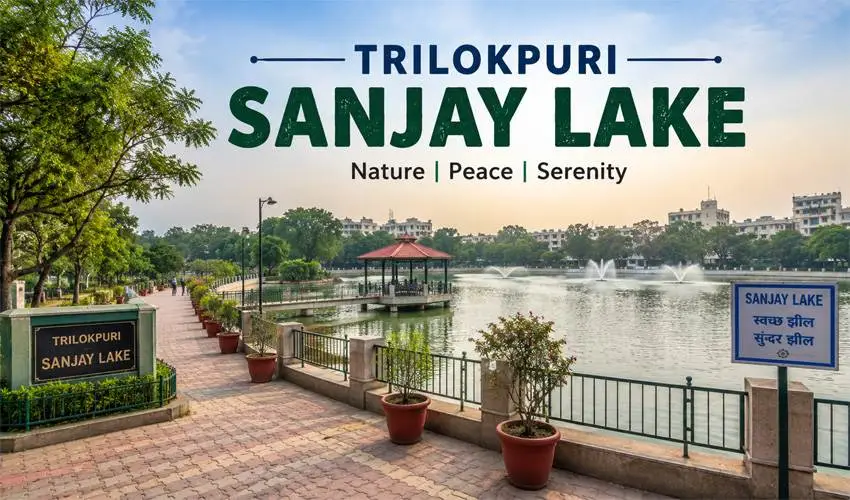
In the heart of a city that never truly sleeps, finding a corner of calm can feel almost impossible. Yet tucked away in the eastern folds of Delhi lies a treasure that many residents of the capital have yet to discover — Trilokpuri Sanjay Lake. Spread across a generous expanse of land in East Delhi, this urban lake is a living contradiction to the chaos that surrounds it. With shimmering waters, manicured green lawns, chirping birds, and the gentle splash of paddle boats, Sanjay Lake offers Delhiites something increasingly rare: genuine peace within city limits.
Whether you are a nature lover seeking a weekend escape, a photography enthusiast chasing golden-hour reflections, or simply a tired soul in need of fresh air and open skies, Trilokpuri Sanjay Lake quietly delivers on every count.
A Glimpse into the History and Origin
Sanjay Lake draws its name from Sanjay Gandhi, the younger son of former Prime Minister Indira Gandhi. Developed during the early post-Emergency era of the 1970s, the lake was part of a broader urban development initiative that aimed to beautify Delhi’s rapidly expanding eastern zones. As resettlement colonies like Trilokpuri grew in the surrounding area during Delhi’s massive urbanisation wave, the lake gradually became the neighbourhood’s green lung — a recreational anchor for communities that had little else in the way of open, accessible public space.
Over the decades, the lake has undergone significant renovation and beautification drives, most notably under the Delhi Development Authority (DDA), which manages the site. Today, it stands not merely as a historical landmark but as a functioning ecological and recreational hub in one of Delhi’s most densely populated districts.
The Lake and Its Surroundings
Sanjay Lake spans approximately 65 acres, making it one of the larger freshwater lakes within Delhi’s urban boundaries. The lake itself is fed by seasonal rainfall and the surrounding drainage systems, maintaining a reasonable water level through most of the year. The waters are home to various species of fish, and the reed beds along the banks provide shelter to a rich array of aquatic and semi-aquatic birds.
The surrounding park is equally impressive. Manicured lawns stretch out in gentle undulations around the water’s edge, dotted with flowering shrubs, ornamental trees, and shaded walkways. Benches are strategically placed so visitors can sit quietly and take in the water views. In the mornings, the park fills with joggers, yoga practitioners, and elderly residents on their daily constitutional. By late afternoon, it transforms into a lively family destination with children running between grassy patches and couples strolling along the lake’s perimeter path.
Boating: The Star Attraction
Without a doubt, the boating facility at Sanjay Lake is its most celebrated feature. The DDA operates a well-maintained boating station where visitors can rent paddle boats and row boats at nominal charges. Gliding out onto the open water with the city’s skyline barely visible through the tree line is a genuinely transportive experience — one that makes it easy to forget you are in the middle of one of the world’s most populous cities.
The boating area is managed with reasonable safety standards, with life jackets available and staff on hand to assist visitors. The experience is especially popular with families and young couples, and on weekends the queue for boats can be a telling sign of just how much Delhiites value this simple pleasure. Early weekday mornings offer the most serene experience, when the lake surface is glass-calm and the only sounds are birdsong and the quiet dip of an oar.
A Birdwatcher’s Delight
Trilokpuri Sanjay Lake has earned a quiet but respected reputation among Delhi’s birdwatching community. The combination of open water, dense reed beds, and mature trees creates a layered habitat that supports a surprising diversity of avian life across the seasons.
Resident species commonly spotted include the Purple Moorhen, Indian Pond Heron, Little Egret, Black-crowned Night Heron, and the vibrant Common Kingfisher. During the winter months, migratory waterfowl arrive to take advantage of the lake’s resources, with species such as the Northern Shoveler, Common Teal, and Gadwall making seasonal appearances. Early morning visits between November and February offer the richest birdwatching opportunities, when migratory birds are present and the light is ideal for observation.
For those new to birdwatching, Sanjay Lake is an excellent starting point — accessible, rewarding, and requiring no special equipment beyond a pair of binoculars and a willingness to sit still for a few quiet minutes.
The Green Canopy and Ecological Significance
Beyond the lake itself, the surrounding green belt plays a meaningful ecological role in an area of Delhi otherwise dominated by concrete and urban density. The trees and shrubs around Sanjay Lake act as a microclimate moderator, reducing ambient temperatures in the immediate vicinity by several degrees during Delhi’s punishing summers. The vegetation also absorbs significant amounts of dust and pollutants, contributing modestly but meaningfully to local air quality.
The reed beds and wetland margins of the lake function as a natural filtration system, and the site has occasionally been studied as a model for how urban wetlands can be preserved and enhanced within rapidly developing cities. Conservation groups have at various times advocated for greater protection and more ecologically sensitive management of the lake, and ongoing DDA initiatives continue to balance public recreational use with habitat preservation.
Facilities for Visitors
The DDA has steadily improved visitor infrastructure at Sanjay Lake over the years. The park is enclosed and entry is free, making it genuinely accessible to residents from all economic backgrounds — a quality that speaks well of its democratic, community-oriented character.
Within the park, visitors will find clean walking paths, public seating, basic food and snack vendors near the entrance, and toilet facilities. The boating station operates on a ticketed basis with modest pricing. A children’s play area within the park grounds makes it particularly family-friendly. Parking is available in the vicinity, though it can get congested on weekends, making public transport or two-wheeler access the more practical choice for peak-hour visits.
Best Time to Visit
Sanjay Lake is a year-round destination, but certain seasons offer notably richer experiences. October through March is widely considered the best period — temperatures are comfortable, migratory birds are present, and the evenings are cool enough for long leisurely walks. The post-monsoon months of September and October are particularly beautiful, when the lake is full, the vegetation is lush and intensely green, and the air carries the clean freshness that only follows a good rain.
Summers in Delhi are brutal, but early morning visits between 5:30 AM and 8:00 AM offer a window of relative cool, and the lake at dawn — mist rising off the water, the first birds calling — is a sight that rewards the early riser. Avoid midday visits between May and July unless you are well-prepared for the heat.
How to Reach Sanjay Lake, Trilokpuri
Sanjay Lake is conveniently located near Trilokpuri-Sanjay Lake Metro Station on the Delhi Metro Pink Line (Line 7), making it one of the most accessible green spaces in East Delhi. The metro station is named after the lake itself — a testament to its prominence in the local landscape. From the station, the lake entrance is a short walk away.
By road, the lake is accessible from Mayur Vihar, Kondli, and IP Extension via local routes. Buses on several DTC routes pass through the Trilokpuri area, and the site is easily reachable by auto-rickshaw from neighbouring localities.
Conclusion
In a megacity perpetually racing toward tomorrow, Trilokpuri Sanjay Lake is a place that invites you to slow down. It is not a grand resort or a ticketed tourist attraction. It is something more valuable — a breathing, living urban wetland where ordinary Delhiites can reconnect with water, greenery, and the unhurried rhythm of nature. For those who have not yet visited, it deserves a place firmly on the must-see list. And for those who already know it, it is simply home.