
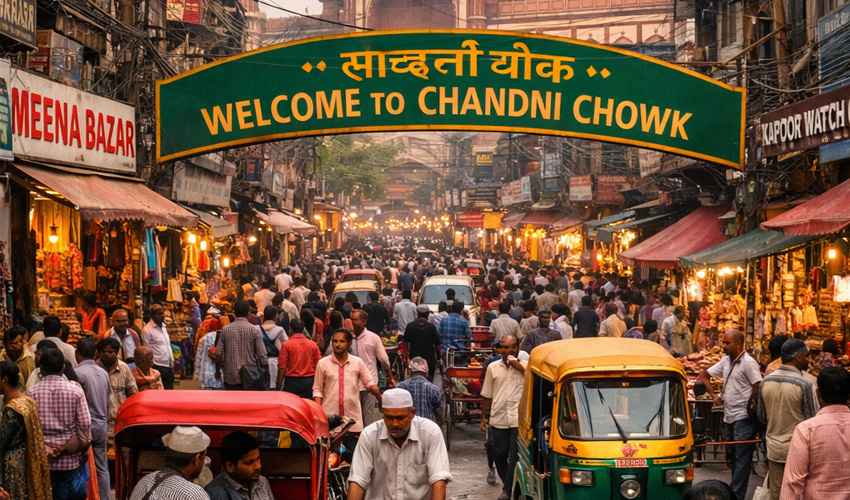
Chandni Chowk is not just a market; it is the soul of Old Delhi. Located near the iconic Red Fort, this historic area has been the heartbeat of Delhi for more than three centuries. Crowded lanes, age-old shops, mouth-watering street food, grand temples, mosques, and havelis all come together to make Chandni Chowk one of the most famous and visited places in the capital. Its fame lies in its history, culture, food, shopping, and unmatched old-world charm.
A Rich Mughal-Era History
Chandni Chowk was built in the 17th century by Mughal emperor Shah Jahan when he shifted his capital from Agra to Delhi. The market was designed by his daughter, Princess Jahanara Begum. Originally, a canal ran through the center of the market, reflecting moonlight at night—hence the name Chandni Chowk, which means “Moonlight Square.”
During the Mughal period, this area was home to nobles, poets, traders, and artisans. Over time, Chandni Chowk evolved into a major commercial hub while retaining its historical character. Even today, walking through its narrow lanes feels like stepping back in time.
One of India’s Oldest and Busiest Markets
Chandni Chowk is famous as one of the oldest continuously operating markets in India. It is divided into several specialized lanes, each known for a particular type of product. For example:
- Dariba Kalan for silver and gold jewelry
- Kinari Bazaar for wedding accessories
- Khari Baoli for spices and dry fruits (Asia’s largest spice market)
- Bhagirath Palace for electrical goods
- Nai Sarak for books and stationery
Wholesale buyers, retailers, tourists, and locals all flock here daily. The market’s scale, variety, and energy make it legendary in Delhi.
Street Food Capital of Delhi
One of the biggest reasons Chandni Chowk is famous is its food. It is considered the street food capital of Delhi and even India by many food lovers. Recipes here have been passed down for generations, preserving authentic flavors.
Some iconic food spots include:
- Paranthe Wali Gali for deep-fried stuffed parathas
- Jalebi Wala for hot, crispy jalebis
- Karim’s near Jama Masjid for Mughlai cuisine
- Old Famous Kachori and Chaat shops serving aloo kachori, chole bhature, and golgappe
From vegetarian delicacies to rich non-vegetarian dishes, Chandni Chowk satisfies every palate.
Religious and Cultural Harmony
Chandni Chowk is a shining example of India’s religious diversity and harmony. Within a small area, you will find some of Delhi’s most important religious sites:
- Jama Masjid, one of the largest mosques in India
- Shri Digambar Jain Lal Mandir, Delhi’s oldest Jain temple
- Gurudwara Sis Ganj Sahib, associated with Guru Tegh Bahadur Ji
- Gauri Shankar Temple, dedicated to Lord Shiva
People from all faiths visit these places daily, making Chandni Chowk a symbol of unity in diversity.
Traditional Shopping Experience
Unlike modern malls, shopping in Chandni Chowk is an experience. Bargaining is common, shopkeepers know their products inside out, and many stores have been run by the same families for decades.
It is especially famous for:
- Bridal wear and wedding shopping
- Traditional Indian fabrics like silk, brocade, and cotton
- Imitation jewelry and accessories
- Ayurvedic herbs, attars (perfumes), and puja items
During festivals like Diwali, Eid, and weddings season, the market transforms into a vibrant spectacle of lights, colors, and crowds.
Architectural Charm and Old Havelis
Hidden behind the busy shops are old havelis (traditional mansions) with intricate carvings, courtyards, and balconies. Though many are now in a state of decay, they still reflect the grandeur of Mughal and colonial-era architecture. These structures add to the nostalgic charm that makes Chandni Chowk famous among historians, photographers, and heritage lovers.
A Living Museum of Old Delhi
Chandni Chowk is often described as a living museum. Every lane tells a story, every shop has a history, and every corner reflects Delhi’s evolution. From hand-pulled rickshaws to centuries-old eateries, it offers an authentic glimpse into life as it was—and still is—in Old Delhi.
Easy Accessibility and Tourist Appeal
Its central location, close to Red Fort and Old Delhi Railway Station, makes Chandni Chowk easily accessible. The Chandni Chowk Metro Station further adds to its convenience, attracting tourists from across India and abroad.
Guided heritage walks, food tours, and photography tours have made it even more popular among travelers seeking a deeper cultural experience.
Conclusion
Chandni Chowk is famous because it represents the true spirit of Delhi—chaotic yet charming, old yet alive, traditional yet ever-evolving. Its historical significance, legendary food, diverse shopping, religious harmony, and cultural richness make it far more than just a marketplace. Whether you are a tourist, a foodie, a shopper, or a history enthusiast, Chandni Chowk leaves an unforgettable impression, proving why it remains one of the most iconic and beloved places in Delhi.