
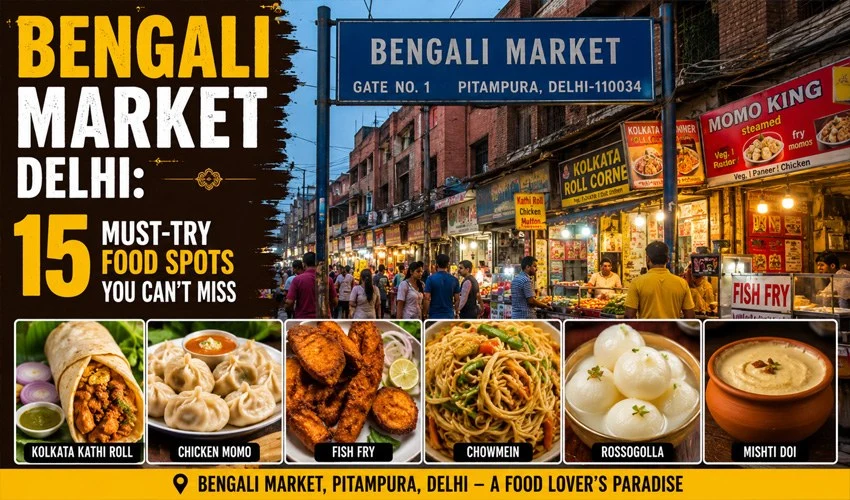
Tucked into a quiet semicircular lane near Mandi House, Bengali Market doesn’t look like much at first glance. There’s no sprawling bazaar, no maze of alleys, no overwhelming crowd of hawkers shouting over one another. What you get instead is a tight cluster of shops, a handful of legendary names, and a food culture so beloved that generations of Delhiites have never stopped coming back for it. Despite the name, Bengali Market has little to do with West Bengal — it was named after a businessman, Bengali Mal Lohia, who set it up in the 1930s as one of the first planned commercial spaces in New Delhi. What it’s actually famous for is North Indian street food, mithai, and a very particular kind of nostalgia that’s hard to find anywhere else in the city.
If you’re planning a food crawl through this pocket of Connaught Place, here are 15 spots and dishes that deserve a place on your list.
1. Nathu’s Sweets Chole Bhature
No conversation about Bengali Market food is complete without starting here. Nathu’s has been serving its chole bhature since the late 1940s, and the combination of ghee-fried bhature with tangy, well-spiced chole has built a reputation that rivals even Amritsar’s best. It’s the single most-ordered dish at the shop for a reason.
2. Nathu’s Golgappe Chaat
Nathu’s golgappas are consistently ranked among the best in Delhi. The shells are crisp, the pani has a sharp, tangy kick, and the stuffing strikes a good balance between potato and chickpeas. It’s a quick, inexpensive bite that’s worth grabbing even if you’re just passing through.
3. Bengali Sweet House’s Raj Kachori
Just a few steps from Nathu’s sits Bengali Sweet House, founded in 1937 by two brothers who moved to Delhi from Bikaner and eventually helped put Bengali sweets on the map here. Their raj kachori is a meal in itself — a giant crisp shell packed with sprouts, potatoes, yogurt, and chutneys, finished with a shower of crunchy sev.
4. Bengali Sweet House Rajma Chawal
For something more comforting, order the rajma chawal here. It’s simple, homestyle, and exactly the kind of dish that regulars order on repeat visits rather than something flashy for tourists — but that’s precisely its charm.
5. Nathu’s Rasgulla
Bengali Market has long been associated with soft, spongy rasgullas, and Nathu’s version is often cited as one of the most authentic you’ll find in the city. Light, not overly sweet, and served fresh, it’s a good palate cleanser after all the chaat.
6. Bengali Sweet House Sandesh
Sandesh is a quieter, more refined sweet compared to the syrup-heavy classics, and Bengali Sweet House does a version worth seeking out. Made from fresh chhena, it has a delicate, slightly grainy texture and a clean milky sweetness that showcases why Bengali mithai earned its reputation in this market to begin with.
7. Nathu’s Kesar Peda
Among the dry sweets, the kesar peda stands out for its saffron aroma and dense, fudgy texture. It travels well too, making it a popular pick for people buying sweets to carry home or gift.
8. Bengali Sweet House Gulab Jamun with Rabri
This is comfort food at its richest — soft, syrup-soaked gulab jamuns served with a generous ladle of thick, reduced rabri on top. It’s indulgent, but that’s rather the point.
9. Nathu’s Aloo Tikki
Crisp on the outside, soft and spiced within, the aloo tikki here is often paired with chole or served solo with tamarind and mint chutneys. It’s a smaller bite than the chaat plates but no less satisfying.
10. Nathu’s Samosas and Kachoris
The savory counter at Nathu’s does brisk business through the day with fresh samosas and kachoris, best eaten hot and paired with a cup of chai from one of the nearby stalls. They make for a good quick breakfast if you’re getting an early start on your market visit.
11. Bengali Sweet House Dahi Bhalla
Soft lentil dumplings soaked in thick, chilled yogurt and topped with tamarind chutney, roasted cumin, and sev — the dahi bhalla here is cooling, tangy, and a favorite during Delhi’s warmer months.
12. Nathu’s Bakery Puffs and Pastries
Not many visitors know that Nathu’s runs a small in-house bakery alongside its sweets and snack counters. The puffs — particularly the vegetable and paneer varieties — are flaky and freshly baked, and make for a nice change of pace if you want something less traditional.
13. Badam Milk at Nathu’s
To wash everything down, order a glass of chilled badam (almond) milk. It’s thick, mildly sweet, and flavored with a touch of saffron and cardamom — a good match for the richer sweets and fried snacks on the menu.
14. Bengali Sweet House Dry Fruit Mithai
For festive shopping or gifting, Bengali Sweet House’s dry-fruit-based sweets are worth checking out. The shop has also expanded its offerings over the years to include sugar-free options, so there’s something for most dietary preferences.
15. Fresh Fruit from Shiv Fruit Mart or Brij Fruit Mart
Round off your food trail with something fresh. Bengali Market is also known for its fruit shops, particularly Shiv Fruit Mart and Brij Fruit Mart, which stock premium and seasonal varieties, including some imported fruits you won’t easily find in neighborhood markets elsewhere in the city. Prices run a little higher here, but the quality is part of what keeps regulars coming back.
Planning Your Visit
Bengali Market is best reached via the Mandi House metro station on the Blue and Violet lines — it’s roughly a five-minute walk from Gate 4. Mornings are a good time to visit if you want a relatively relaxed experience without the crowds, while evenings bring out the market’s full, lively energy, especially around the two big sweet shops. Most shops here operate from around 10 AM to 10 PM on weekdays and Saturdays, though it’s worth checking current timings since some outlets close on Sundays.
Because the market itself is compact, you can comfortably cover most of this list in a single visit, moving between the counters at Nathu’s Sweets and Bengali Sweet House, which sit close enough to each other that comparing dishes side by side is half the fun. Beyond the food, the surrounding area has its own appeal — Mandi House is a cultural hub in its own right, home to institutions like the National School of Drama and Kamani Auditorium, so a food crawl here pairs easily with a stroll through Delhi’s theater district or a stop at nearby galleries.
A Market That Runs on Nostalgia
What makes Bengali Market different from Delhi’s larger, more famous food destinations is its scale. There’s no sprawling lane of competing stalls, no need to research dozens of options before deciding where to eat. Instead, two or three institutions have quietly done the job for nearly a century, refining a small set of dishes until they became benchmarks for the rest of the city. Families who grew up nearby still return for the same chole bhature or rasgulla their parents and grandparents ordered decades ago, and that continuity is really the market’s biggest draw.
Whether you’re a longtime Delhi resident looking to revisit an old favorite or a first-time visitor trying to understand the city’s street food culture, Bengali Market offers a compact but deeply satisfying introduction. Come hungry, pace yourself between the sweet counters and the chaat plates, and don’t leave without picking up a box of mithai for the road.
 Priya Sharma