
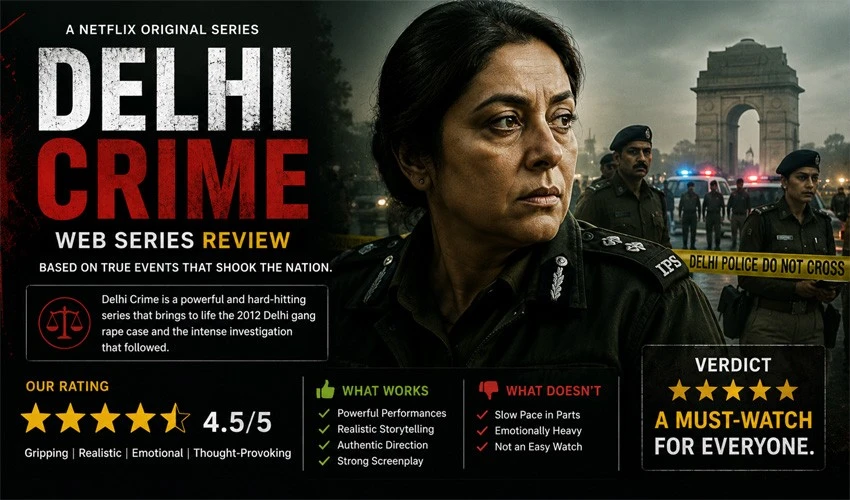
Indian streaming content has produced no shortage of crime dramas over the past several years, but few have managed to achieve the kind of global recognition earned by Delhi Crime. Streaming on Netflix, this Hindi-language police procedural did something no other Indian television series had done before: it brought home the International Emmy Award for Best Drama Series, placing Indian storytelling firmly on the world stage.
This article takes a close look at what makes Delhi Crime such a compelling watch, why it resonated so strongly with both domestic and international audiences, and how its unflinching, grounded approach to storytelling helped it stand apart in an increasingly crowded genre.
About Delhi Crime
Delhi Crime was created by Canadian filmmaker Richie Mehta and follows Shefali Shah’s character, Deputy Commissioner of Police Vartika Chaturvedi, as she and her team investigate a single complex case each season. The first season, consisting of seven episodes, released in 2019 and was based on the harrowing 2012 Delhi gang rape case that had drawn international attention at the time.
Rather than dwelling on the crime itself, the season focuses on the demanding, high-pressure investigation carried out by a dedicated police unit, covering the cross-state manhunt, painstaking legwork, and political pressures the officers faced along the way. This procedural approach, prioritizing realism over sensationalism, became one of the defining hallmarks of the series and a major reason for its critical success.
The second season arrived in 2022 with five episodes, this time following DCP Vartika and her team as they investigated a series of brutal killings linked to the Kachcha Baniyan gang. A third season, inspired by the 2012 Baby Falak case, shifts focus toward a human trafficking investigation that extends Chaturvedi’s inquiry beyond the boundaries of Delhi, with actress Huma Qureshi joining the cast as the mastermind behind the trafficking network.
The Story That Captivated the World
What sets Delhi Crime apart from typical crime dramas is its refusal to dramatize violence for shock value. Instead, the series takes a documentary-like approach to storytelling, immersing viewers in the day-to-day realities of police work: the bureaucratic hurdles, resource constraints, political interference, and emotional toll experienced by officers tasked with solving deeply disturbing cases.
The first season’s narrative structure mirrors the real timeline of the investigation it depicts, giving audiences an almost real-time sense of urgency as the police force races against public outrage, media scrutiny, and their own limited resources to track down the perpetrators. This restraint, choosing procedural detail over gratuitous depiction, allowed the show to handle an extremely sensitive real-life tragedy with a level of respect and seriousness rarely seen in crime television.
Subsequent seasons have continued this approach while expanding the scope of the storytelling, tackling different real-life inspired cases such as gang violence and human trafficking networks. Each season maintains the show’s signature blend of procedural detail and character-driven drama, ensuring that the human cost of crime, both for victims and investigators, remains central to the narrative.
Cast and Performances
At the heart of Delhi Crime’s success lies its exceptional cast, led by veteran actress Shefali Shah in the role of DCP Vartika Chaturvedi. Shah’s portrayal has been widely praised for anchoring the series with a sense of calm resilience amid chaos, bringing depth and authenticity to a character who must navigate immense pressure while maintaining composure and integrity.
She is closely supported by Rajesh Tailang, who plays Inspector Bhupendra with a grounded, weary determination that complements Shah’s commanding presence. Rasika Dugal also delivers a memorable performance as ACP Neeti Singh, contributing to the ensemble’s overall sense of realism and camaraderie under pressure.
The first season’s cast also included Abhilasha Singh among other key actors who brought authenticity to the depiction of the Delhi Police force. The second season introduced Tillotama Shome as a formidable antagonist, while the upcoming third season sees Huma Qureshi step into a similarly commanding villainous role, continuing the show’s tradition of pairing its steady procedural core with compelling adversaries.
The performances throughout the series avoid melodrama, favoring a naturalistic acting style that mirrors the show’s broader commitment to authenticity. This consistency across seasons, even as new characters and storylines are introduced, has helped Delhi Crime maintain its critical reputation season after season.
The International Emmy Win and Global Recognition
In 2020, Delhi Crime won the Best Drama Series award at the 48th International Emmy Awards, produced by Golden Karavan, SK Global Entertainment, and Netflix India. This victory made it the first Indian show to win Best Drama Series at the International Emmy Awards, a landmark achievement for Indian television on the global stage.
Accepting the award, director Richie Mehta dedicated the honor to women who endure violence and are then left to seek justice for it themselves, specifically remembering the victim at the center of the story and her mother. The win was celebrated widely across the Indian entertainment industry, with the show’s cast and crew expressing pride at having represented India on such a prestigious international platform.
The recognition did not stop with the first season. Shefali Shah earned a Best Actress nomination at the International Emmy Awards in 2023 for her work in the show’s second season. Overall, Delhi Crime has accumulated an impressive collection of honors, including multiple International Emmy nominations and wins, along with numerous other awards from Indian and Asian entertainment award bodies, reflecting sustained critical acclaim across its run.
Why Delhi Crime Resonated Internationally
Several factors help explain why Delhi Crime managed to strike a chord with audiences and critics far beyond India’s borders.
- Universal Themes: While rooted in specific Indian cases, the show’s exploration of institutional pressure, gender-based violence, and the pursuit of justice touches on themes that resonate universally, regardless of geography or culture.
- Procedural Authenticity: Unlike many crime dramas that rely on dramatic flourishes, Delhi Crime’s meticulous, almost journalistic approach to depicting police investigations gave international audiences a rare, grounded look into how law enforcement in India actually functions, warts and all.
- Strong Central Performances: Shefali Shah’s portrayal of a composed yet deeply human police officer offered global viewers a compelling protagonist whose strength lies not in dramatic heroics but in quiet perseverance under extraordinary pressure.
- Respectful Handling of Sensitive Subject Matter: By focusing on the investigation rather than sensationalizing the crime itself, the series managed to honor the gravity of the real events that inspired it, earning respect from critics who often scrutinize how such sensitive material is handled on screen.
- High Production Standards: The show’s cinematography, pacing, and attention to procedural detail reflect a level of craftsmanship that stands comfortably alongside acclaimed crime dramas from other parts of the world, helping it compete for recognition on an equal footing.
Critical Reception
Critics have consistently praised Delhi Crime for its restrained, realistic storytelling approach. Reviewers have described the show as a landmark in true-crime storytelling, noting how it trades sensationalism for a grounded sense of authenticity that feels genuinely groundbreaking within the genre. The performances, particularly Shah’s central turn, have been repeatedly singled out as a major strength of the series.
With an IMDb rating of 8.5 based on its first two seasons, the show has maintained strong audience approval alongside its critical acclaim, a rare combination for crime dramas dealing with such difficult subject matter. This consistency across both critical and audience reception speaks to the show’s careful balancing act between emotional weight and narrative engagement.
What to Expect from Season 3
The upcoming third season shifts its focus toward a human trafficking investigation inspired by the 2012 Baby Falak case, expanding Vartika Chaturvedi’s inquiry beyond Delhi’s borders. Huma Qureshi joins the ensemble as the season’s central antagonist, stepping into direct conflict with Shah’s character, while returning cast members Rasika Dugal and Rajesh Tailang continue their roles, with Tanuj Chopra returning as director and showrunner.
Given the show’s track record, expectations for the new season remain high, both in terms of narrative quality and its potential for further international recognition.
Final Thoughts
Delhi Crime stands as a powerful example of how grounded, thoughtfully crafted storytelling can transcend cultural and geographic boundaries to achieve genuine global acclaim. By prioritizing procedural authenticity over sensationalism, anchoring its narrative in outstanding performances, and handling deeply sensitive real-life events with care and respect, the series carved out a distinct identity within the crowded crime drama genre.
Its historic International Emmy win was not simply a moment of national pride for Indian television but a recognition of the show’s genuine storytelling merit on a global scale. As the series continues to evolve with new seasons and new cases, Delhi Crime remains a benchmark for what thoughtful, socially conscious crime storytelling can achieve, both at home and on the world stage.