
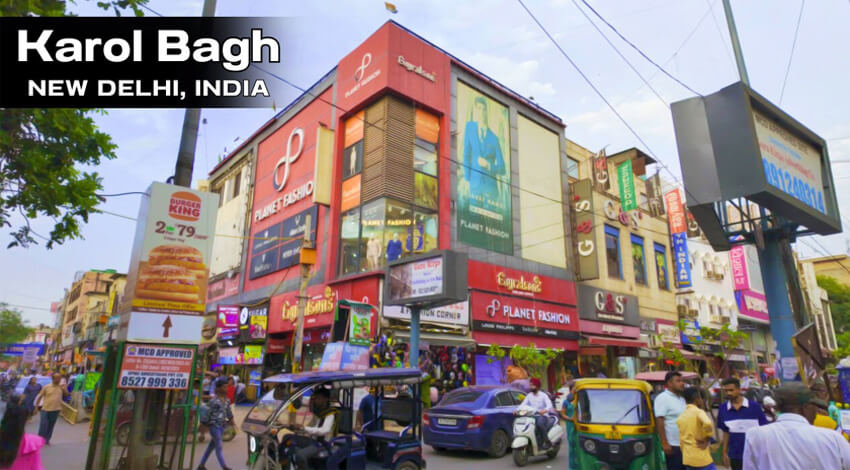
Karol Bagh, New Delhi, Delhi is a lot of things at once. A shopping district. A residential colony. A transit hub. A street food maze. And depending on your budget and your tolerance for crowds, either your favourite part of Delhi or the one that sends you retreating to Connaught Place. I just got back. Here’s what I actually found.
Introduction to Karol Bagh
Overview of Karol Bagh
Karol Bagh sits in Central Delhi, sandwiched between Patel Nagar to the west and Paharganj to the east. It’s dense, commercial, loud in the best way, and moves fast from 10 AM to 10 PM.
What makes it distinct: it’s one of the few places in Delhi where you can buy a bridal lehenga, a second-hand iPhone, street-side chole bhature, and a decent mid-range hotel room all within a 10-minute walk.
Why Karol Bagh is famous
Two things: markets and connectivity.
- Ajmal Khan Road and Gaffar Market are the magnets. The first pulls in shoppers looking for fashion, bridal wear, and footwear. The second pulls in anyone hunting for electronics, mobiles, and accessories at prices you won’t find on Amazon.
- The metro station (Blue Line, Green Line interchange) makes it easy to reach from almost anywhere in Delhi. That accessibility compounds everything.
Location in New Delhi
It’s in Central West Delhi, roughly 5 km from Connaught Place, about 15 km from IGI Airport, and 3 km from New Delhi Railway Station.
History of Karol Bagh
Origin of the area
Karol Bagh developed as a planned residential area during British rule, initially as housing for government employees. The name itself is believed to derive from “carol” and “bagh” (garden), though the garden character is essentially gone now.
Development through the years
Post-Partition in 1947 changed Karol Bagh permanently. Millions of refugees displaced from what became Pakistan resettled here. That demographic shift built the commercial DNA of the area. Entrepreneurial refugee families set up shops, and those shops multiplied. By the 1980s it was already one of Delhi’s main retail corridors. The metro in 2005 compounded the footfall dramatically.
Cultural significance
There’s something interesting happening on Arya Samaj Road specifically. The Arya Samaj Mandir there still performs thousands of Hindu marriages annually, and entire ecosystems of bridal shops, jewelers, and catering services cluster around it. It’s a real node of cultural life, not just commerce.
Where is Karol Bagh located?
Map and connectivity
Central Delhi. About as well-connected as any non-tourist area gets.
Blue Line metro (Rajiv Chowk to Dwarka) stops here. Green Line (Inderlok to Brigadier Hoshiyar Singh) intersects at Karol Bagh metro station. That puts you within 2 transfers of almost anywhere in NCR.
Nearby areas
Patel Nagar, Rajendra Nagar, Paharganj, Jhandewalan, and Desh Bandhu Gupta Road are all immediate neighbors.
Distance from major landmarks
- Connaught Place: 5 km (15 minutes by metro)
- New Delhi Railway Station: 3 km
- IGI Airport: 15 km (about 40 minutes without traffic, which is aspirational)
- India Gate: 7 km
- Chandni Chowk: 8 km
Famous markets in Karol Bagh
Ajmal Khan Road
The main artery. If you walk it end to end, you’ll pass something like 300 shops selling clothes, footwear, and accessories.
- Clothing shopping: Mid-range fashion is the sweet spot. Brands like Cantabil, Monte Carlo, and dozens of local manufacturers set up here. You’ll find ethnic wear, western casuals, and the full spectrum between.
- Footwear stores: The footwear concentration is genuinely surprising. Liberty, Bata, Action, and wall-to-wall local stores. Budget something like 500 to 2,500 rupees depending on what you’re after.
- Budget fashion: This is where students and families from across NCR shop. A decent kurta set for under 800 rupees is findable. A full bridal-adjacent outfit for under 3,000 rupees isn’t unrealistic if you’re patient and willing to bargain.
Gaffar Market
About 5 minutes off Ajmal Khan Road, and a completely different environment.
- Electronics market: Dense, fast-talking, and genuinely useful. New phones, refurbished devices, cases, chargers, cables, earphones. It’s organized chaos.
- Mobile accessories: This is probably the single best place in Delhi to buy mobile accessories at wholesale-adjacent prices. AirPod copies for 300 rupees. Actual decent Bluetooth speakers from 800 rupees upward.
- Bargaining tips: Quote 40% of the first asking price. Work from there. Don’t feel bad about it. The shopkeeper will.
One real thing I noticed: the market is stratified. Ground level tends to be the more reputable shops. Basement and upper floors trend toward replicas and grey-market stock. Know which you’re after before you go in.
Arya Samaj Road
This is the wedding shopping corridor. Sarees, lehengas, sherwanis, dupatta sets, the whole wedding trousseau industry concentrated in a few hundred meters.
Prices range from accessible to extremely serious. A mid-range bridal lehenga here runs 15,000 to 50,000 rupees. You can find things outside that range in both directions. The Arya Samaj Mandir at the end of the road has been performing weddings since 1875. That’s not incidental to why the market around it exists.
Top places to visit near Karol Bagh
Jhandewalan Temple
2 km from Karol Bagh metro. Dedicated to Goddess Jhandewali, built into the side of a hill. There’s also a Hanuman murti nearby that’s become a kind of landmark. Genuinely popular with local devotees, not just tourists.
Birla Mandir
Also called Lakshmi Narayan Temple. About 3 km from Karol Bagh. Built in 1939 by industrialist B.D. Birla. White marble, well-maintained, and set in gardens that feel surprisingly calm given the city outside.
India Gate
7 km by road. The war memorial is a standard Delhi stop, but the stretch of Rajpath (now Kartavya Path) surrounding it was redeveloped in 2022 and is worth seeing in its current form.
Connaught Place
5 km. The comparison to Karol Bagh is interesting because they’re after different things. CP is for branded retail, cafes, and organized commercial experience. Karol Bagh is for value, volume, and street energy. Both have uses.
Best Hotels in Karol Bagh
Budget Hotels
Plenty of options in the 800 to 2,000 rupee per night range. Hotel Vikram, Hotel Namaskar, several others. Air-conditioned, functional, close to the market. Don’t expect much beyond cleanliness and a working shower.
Mid-Range Hotels
The 2,500 to 6,000 rupee category has some genuinely decent options. Hotel Godwin, Country Inn & Suites, Park Inn by Radisson (Paharganj-adjacent but close enough). Comfortable rooms, often with breakfast included.
Luxury Hotels
The Crown Plaza New Delhi Okhla is the area’s most cited luxury option, though it’s technically about 20 minutes out. Within Karol Bagh proper, The Piccadily and similar properties give you 4-star quality at 3-star prices compared to South Delhi.
Hotels Near Metro Station
Staying within 500 meters of Karol Bagh Metro Station makes a meaningful difference for mobility. Hotel Vikram and several guesthouses on Pusa Road are in that radius.
Restaurants and food in Karol Bagh
Street food
This is where the area genuinely excels. The stretch near Ajmal Khan Road and the lanes off Gaffar Market have some of the best street food density I’ve hit in Delhi. Chole bhature at Roshan Di Kulfi (it’s an institution, open since 1946). Dahi bhalle from a dozen carts near the market entrance. Golgappe that will ruin you for golgappe anywhere else. Get there by 12 PM. The good stuff runs out.
North Indian restaurants
Sona Rupa Restaurant on Ajmal Khan Road has been there decades. Vegetarian, cheap, and consistently decent. Kwality Restaurant is another old-timer. For something more intentional, the restaurants in the hotel properties near the metro station give you reliable North Indian thalis in the 350 to 700 rupee range.
Family dining options
Bikanervala on Ajmal Khan Road is probably the most reliable family stop. Big space, extensive menu, consistent quality, prices that won’t surprise you. Their sweets counter is also worth a stop.
Popular cafes
The cafe culture is building here but hasn’t hit the density of Khan Market or Hauz Khas. Barista has a presence. A few independent spots have opened near the residential pockets of Pusa Road. Expect to walk a bit to find the more interesting options.
Shopping in Karol Bagh
The full breakdown by category, based on what I actually found:
- Clothes: Ajmal Khan Road is the anchor. Ethnic, western, fusion. Budget-friendly across the board.
- Bridal wear: Arya Samaj Road, supplemented by several large showrooms on Ajmal Khan Road itself. Bargaining expected and effective.
- Electronics: Gaffar Market exclusively. Build time and patience into that visit.
- Jewellery: Scattered through the market area. The heavier traditional pieces cluster near the bridal section. Silver jewellery is particularly well-represented.
- Footwear: Concentrated on Ajmal Khan Road between the middle and south end.
How to Reach Karol Bagh
By Metro
Karol Bagh Metro Station sits on both the Blue Line (Line 3) and Green Line (Line 5). It’s an interchange station. From Rajiv Chowk (Connaught Place): 3 stops on the Blue Line, about 8 minutes. From New Delhi Railway Station: Take the Yellow Line to Rajiv Chowk, switch to Blue Line, one more stop. Nearby metro routes: Jhandewalan (Blue Line) is one stop west. Rajiv Chowk is one stop east.
By Train
New Delhi Railway Station is 3 km away. Auto-rickshaws quote 80 to 120 rupees for the ride, which is accurate when they’re not running tourist rates. Cabs run 100 to 150 rupees on meter.
By Airport
IGI Airport to Karol Bagh: take the Airport Express Line to New Delhi Railway Station, then switch to Blue Line metro. Total journey around 40 to 50 minutes depending on connections. Cab direct: 350 to 600 rupees depending on traffic and platform.
By Bus and Taxi
DTC buses serve Karol Bagh from across Delhi. Bus stop at Ajmal Khan Road and Pusa Road. Ola and Uber work normally throughout the area.
Karol Bagh Metro Station Guide
Timings
Roughly 6:00 AM to 11:00 PM, matching Delhi Metro’s general operating hours. First and last train times vary slightly by day.
Routes
Blue Line (Line 3): Dwarka Sector 21 to Noida Electronic City / Vaishali Green Line (Line 5): Inderlok to Brigadier Hoshiyar Singh
Facilities
Paid parking available. Multiple exit gates. Lift access on all platforms. Token machines and smart card recharge counters at both exits. Exit Gate 3 is closest to Ajmal Khan Road. Exit Gate 1 puts you near the residential stretches of Pusa Road.
Residential life in Karol Bagh
Living costs
Rent for a 2BHK in the core area: roughly 20,000 to 35,000 rupees per month. The residential pockets off Pusa Road and toward Rajendra Nagar are marginally calmer and priced similarly. Groceries, commuting, and daily expenses run about 15,000 to 25,000 rupees monthly for a single person living reasonably.
Schools
DPS Pusa Road and several convent schools are within 2 to 3 km. The area has solid school density by Delhi standards.
Hospitals
Sir Ganga Ram Hospital is 2 km away and is one of Delhi’s better private hospitals. Rajiv Gandhi Super Specialty Hospital is accessible. Multiple clinics and polyclinics operate throughout the colony.
Safety
Generally considered safe during the day. The commercial areas are crowded enough that petty crime stays suppressed by sheer density. At night, the residential pockets are quiet. The market areas thin out by 9 PM. Standard urban awareness applies.
Property rates in Karol Bagh
Residential prices
As of 2025, residential flats in Karol Bagh proper were trading between 12,000 and 20,000 rupees per square foot. Builder floors in the quieter lanes run lower. Renovated apartments in premium buildings hit the top of that range.
Commercial property
Commercial space on Ajmal Khan Road is Delhi-expensive. Prime ground-floor shops quote upwards of 35,000 rupees per square foot to buy. Monthly rentals for small commercial units start around 50,000 rupees.
Rental trends
Demand has stayed consistent. The metro connectivity keeps vacancy low. PG accommodations aimed at students and young professionals run 8,000 to 15,000 rupees per month for a single room with meals.
Best Time to Visit Karol Bagh
October through March. Delhi winters are genuinely good for walking markets. You can spend 4 to 6 hours in the lanes without the summer heat making every decision feel worse. Avoid May and June. The heat makes Gaffar Market’s tight lanes unpleasant in a specific way.
Festival season (Navratri, Dussehra, Diwali) from September to November is technically the best time for shopping selection and the worst time for crowds. Prices are non-negotiable during festival rush. Plan accordingly.
Travel Tips for Visitors
Wear walking shoes. The pavements are uneven throughout.
- Carry cash. Gaffar Market especially runs heavily cash-based. Not all shops have card terminals, and the ones that do often add 2% for card payments.
- Start early. The markets open around 10:30 AM. By 11 AM the lanes fill up. By 2 PM on weekends it’s dense enough to slow you down significantly.
- Eat at Roshan Di Kulfi even if you’ve already eaten.
- Don’t trust the first auto-rickshaw price. The second or third driver will be reasonable.
- Download Delhi Metro’s official app before you go. It has live route planning and fare estimates that are accurate.
Frequently asked questions
Is Karol Bagh good for shopping?
Yes. Particularly for budget fashion, ethnic wear, bridal shopping, and electronics. It’s not for branded retail or luxury goods. For that, you want CP or Select Citywalk.
What is Karol Bagh famous for?
Ajmal Khan Road market, Gaffar Market electronics, dense street food, and mid-range hotel options close to the metro.
Which metro line serves Karol Bagh?
Both the Blue Line (Line 3) and Green Line (Line 5). It’s an interchange station.
Is Karol Bagh safe for tourists?
By general Delhi standards, yes. Standard urban awareness applies, particularly around Gaffar Market where pickpocketing in dense crowds is a known issue. Keep your phone in a front pocket and stay aware.
What are the best hotels in Karol Bagh?
For budget: Hotel Vikram, Hotel Namaskar. Mid-range: Country Inn & Suites, Park Inn. The area’s real advantage is that mid-range here buys you more room than equivalent price points in South Delhi.