
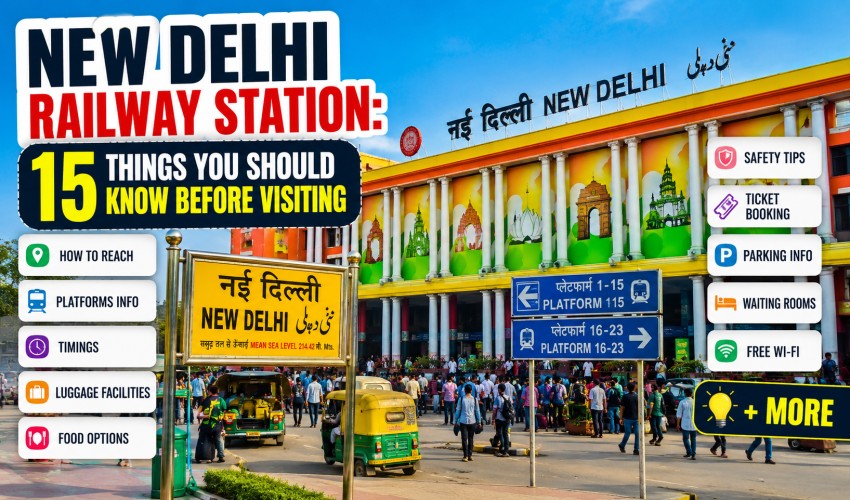
New Delhi Railway Station (station code: NDLS) is one of the busiest and most important railway hubs in India. Located near Paharganj and Ajmeri Gate in the heart of the capital, it serves as a major gateway for millions of travelers heading to destinations across the country every single day. Whether you’re a first-time visitor, a seasoned traveler, or someone catching a connecting train, navigating this massive station can feel overwhelming without the right information. Here are 15 essential things you should know before visiting New Delhi Railway Station.
1. It Has Two Main Entrances — Choose Wisely
New Delhi Railway Station has two primary entrances: the Ajmeri Gate side and the Paharganj side. The Ajmeri Gate entrance is generally considered more organized and less chaotic, while the Paharganj side tends to be busier and surrounded by budget hotels, markets, and street vendors. Knowing which entrance is closer to your platform can save you a significant amount of walking time, especially if you’re carrying heavy luggage. Always check your ticket or the station map beforehand to determine the most convenient entry point.
2. It’s Massive — Arrive Early
With 16 platforms spread across a sprawling complex, New Delhi Railway Station is not a place where you want to rush. The station handles hundreds of trains and lakhs of passengers daily, making it one of the busiest stations in the world. It’s advisable to arrive at least 45 minutes to an hour before your scheduled departure, particularly during peak hours, festival seasons, or holidays when crowds multiply significantly.
3. Platform Numbers Can Be Confusing
Unlike some smaller stations, New Delhi Railway Station’s platform layout isn’t always intuitive. Trains can sometimes be rescheduled to different platforms at the last minute, so it’s crucial to check the electronic display boards regularly rather than relying solely on your ticket information. Announcements are made in Hindi and English, but visual confirmation on the boards is your safest bet.
4. Security Checks Are Mandatory
Every passenger entering the station must pass through security screening, including baggage X-ray scans and physical frisking. This is a standard safety protocol across Indian railway stations, so factor in extra time for these checks, especially during peak travel periods or heightened security alerts. Keep sharp objects, flammable materials, and prohibited items out of your luggage to avoid delays.
5. Pre-Booked Tickets Save Time and Stress
While unreserved tickets are available at counters, booking your tickets in advance through the IRCTC website or app is highly recommended. Not only does this guarantee you a confirmed seat, but it also eliminates the need to stand in long queues at the station itself. If you’re a tourist, note that foreign nationals can also book tickets through IRCTC with proper registration.
6. Prepaid Taxi and Auto Booths Are Available
To avoid haggling with touts or being overcharged, use the prepaid taxi and auto-rickshaw booths located outside the station. These government-regulated counters offer fixed rates based on your destination, providing a safer and more transparent alternative to negotiating directly with drivers on the street. Simply tell the booth operator your destination, pay the quoted fare, and you’ll receive a receipt with your vehicle details.
7. Beware of Touts and Scammers
Unfortunately, New Delhi Railway Station has a reputation for touts who target unsuspecting travelers, particularly tourists. Common scams include people claiming your train is cancelled, offering to “help” you find your platform for a fee, or directing you to fake travel agencies. Politely decline unsolicited help, verify information only through official station staff or digital displays, and never hand over your ticket or passport to strangers.
8. Cloak Room Facilities for Luggage Storage
If you have time to explore Delhi before or after your train, the station offers a cloak room (luggage storage facility) where you can safely store your bags for a nominal fee. This is particularly useful for travelers with early morning arrivals or late-night departures who want to freshen up or sightsee without lugging their belongings around the city.
9. Multiple Food and Refreshment Options
New Delhi Railway Station houses various food stalls, restaurants, and the IRCTC-run “Jan Ahaar” outlets that offer hygienic and reasonably priced meals. You’ll find everything from regional Indian snacks to packaged food and beverages. However, it’s wise to check packaging seals and expiry dates when purchasing food from vendors, and carrying your own water bottle or snacks is always a good backup plan.
10. Free Wi-Fi Is Available
Thanks to the Railtel and Google collaboration initiated some years ago, New Delhi Railway Station offers free high-speed Wi-Fi to passengers. This is incredibly useful for checking train statuses, staying connected with family, or simply passing the time while waiting. You typically need to register with your mobile number to access the network.
11. Waiting Rooms and Retiring Rooms
For passengers with long layovers or overnight waits, the station provides waiting rooms categorized by class (AC and non-AC) as well as retiring rooms that function like basic hotel rooms for short stays. These facilities require you to show a valid train ticket and are available on a first-come, first-served basis or through advance booking in some cases.
12. Digital Display Boards Are Your Best Friend
Given the scale of operations, relying on digital display boards throughout the station for real-time updates on platform numbers, delays, and train status is essential. These boards are updated frequently and are far more reliable than word-of-mouth information from strangers or even some station announcements during particularly noisy periods.
13. Accessibility Features for Differently-Abled Passengers
New Delhi Railway Station has made efforts to improve accessibility, including ramps, wheelchairs (available on request), and designated staff assistance for differently-abled and elderly passengers. If you or a travel companion requires assistance, it’s advisable to inform the railway authorities in advance or seek help from the Railway Protection Force (RPF) personnel stationed throughout the complex.
14. Connectivity to Delhi Metro
One of the biggest conveniences of New Delhi Railway Station is its direct connectivity to the Delhi Metro network via the New Delhi Metro Station, which serves both the Yellow Line and Airport Express Line. This makes it incredibly easy to reach other parts of the city, including Connaught Place, Chandni Chowk, or even the Indira Gandhi International Airport, without dealing with road traffic congestion.
15. Peak Hours and Seasonal Crowds
Understanding crowd patterns can make a huge difference to your experience. Early mornings, evenings, and the festival seasons (especially around Diwali, Chhath Puja, and summer vacation months) see extremely high footfall. If possible, try to plan your travel outside these peak windows, and always keep your belongings close and secure in crowded areas to avoid theft or pickpocketing.
Final Thoughts
New Delhi Railway Station is more than just a transit point — it’s a microcosm of India’s diversity, energy, and organized chaos. While it can seem intimidating at first, being prepared with the right knowledge transforms the experience from stressful to manageable. Arrive early, verify your platform through digital boards, use prepaid transport options, stay alert to scams, and take advantage of the facilities available to you. With these 15 tips in mind, you’ll be well-equipped to navigate one of India’s busiest railway stations with confidence and ease, whether you’re beginning an adventure across the subcontinent or simply passing through the capital.