
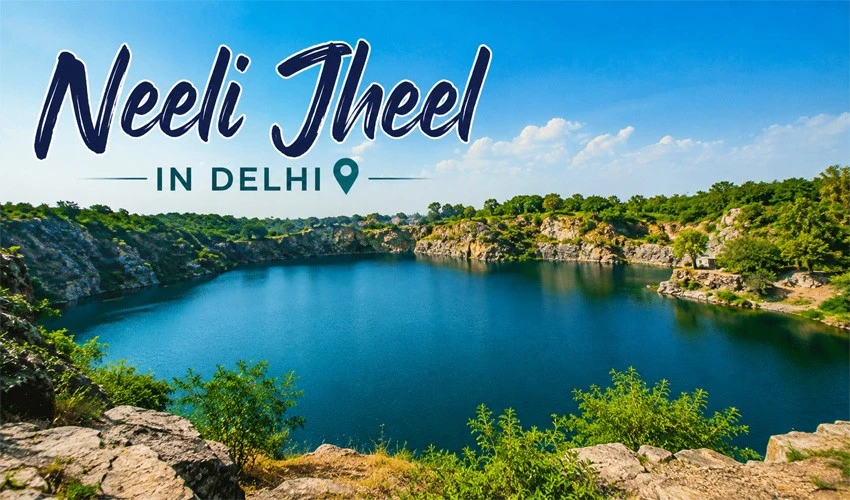
If you think Delhi has nothing left to offer beyond monuments, metro rides, and market chaos, Neeli Jheel will change your mind. Tucked inside the Asola Bhatti Wildlife Sanctuary in South Delhi, this striking blue-water lake feels like a piece of the hills dropped into the capital. It’s quiet, scenic, and refreshingly different from the usual Delhi tourist circuit — which is exactly why it’s become one of the city’s most talked-about weekend getaways.
This guide covers everything you need before you plan your visit: what Neeli Jheel actually is, its history, how to reach it, what to expect once you’re there, and practical tips to make the most of your trip.
What Is Neeli Jheel?
Neeli Jheel, which translates to “Blue Lake,” is a striking turquoise-blue water body located within the Asola Bhatti Wildlife Sanctuary on the Delhi-Haryana border. Unlike most lakes in Delhi that were built for water supply or ornamental purposes, Neeli Jheel actually began its life as a mining quarry. Once the Asola Bhatti mines were abandoned, the deep pits gradually filled with rainwater and groundwater, eventually forming a lake with strikingly clear, blue-tinted water — a rare sight in a city more associated with smog than scenic beauty.
Locally, the lake is also known as Bharadwaj Lake, and it sits within one of Delhi’s last remaining stretches of the Aravalli hill range and scrub forest. The sanctuary surrounding it is home to nilgai, jackals, foxes, monkeys, and over a hundred species of birds, making the area significant not just for its looks but for its ecology as well.
In fact, Neeli Jheel’s importance has been recognized at a policy level too. The Delhi government has been working toward getting the lake officially notified as the city’s first Ramsar site — an international designation given to wetlands of ecological importance. This recognition would make Neeli Jheel a landmark not just for tourism, but for wetland conservation in the region.
A Brief History
The story of Neeli Jheel is tied closely to the story of the Asola Bhatti Wildlife Sanctuary itself. The area was once heavily mined for stone and minerals, leaving behind large excavated pits scattered across the landscape. Once mining activity stopped, nature slowly reclaimed the space. Rainwater collected in the deepest pits, and over the years, one of these evolved into the deep blue lake now known as Neeli Jheel.
In 2023, the Delhi government formally developed Neeli Jheel as an eco-tourism destination. The site was inaugurated with several visitor-friendly additions, including solar-powered artificial waterfalls, a designated selfie point, and pathways built using eco-friendly materials like wood and bamboo rather than concrete. The idea was to create a nature experience that stayed true to the sanctuary’s wild character, rather than turning it into another manicured city park.
Location and How to Reach Neeli Jheel
Neeli Jheel is located inside the Asola Bhatti Wildlife Sanctuary, near Tughlakabad in South Delhi, close to the Delhi-Haryana border. There are multiple entry points into the sanctuary, and different gates are used depending on which direction you’re coming from — one gate is accessed via Chhatarpur, while another is reached through the area near the Guruji Temple.
- By Metro: The nearest metro station is Tughlakabad, which is roughly 3 km from the lake. From there, you’ll need to take an auto-rickshaw or cab for the remaining distance, since the sanctuary itself isn’t directly connected by public transport.
- By Road: If you’re driving, Neeli Jheel is easily reachable from South Delhi localities like Chhatarpur, Saket, and Mehrauli. Parking is available near the entry gates, though it’s advisable to arrive early on weekends since the spot draws a fair crowd.
- By Railway: Tughlakabad Railway Station is the closest railway station, situated about 3 km away, making it a convenient option if you’re travelling from other parts of the NCR by train.
Since the sanctuary spans a large area, it helps to know which gate is closest to Neeli Jheel before you set out, so you don’t end up walking longer distances than necessary once inside.
Entry Tickets and Timings
Neeli Jheel operates as a ticketed eco-tourism site, with entry passes available at the gates leading into the sanctuary. At the time the eco-tourism site was launched, tickets were sold only at the entrance counters, though there were plans to eventually roll out online booking for visitors’ convenience. It’s a good idea to check current ticket rates and timings locally or with the Delhi Forest Department before heading out, since these details can be revised from time to time.
The site is best visited during daylight hours, and most visitors plan their trip either in the early morning or later in the afternoon to catch the best light on the water and avoid the harsher midday sun.
What to Expect at Neeli Jheel
The biggest draw at Neeli Jheel is, unsurprisingly, the lake itself. The water has a distinct blue tint, quite different from the murky greenish-brown you might expect from a typical Delhi water body, and it’s this unusual clarity that has made the spot a magnet for photographers and Instagram-hunters alike.
Beyond the lake, here’s what the eco-tourism site offers:
- Solar-powered artificial waterfalls: Four waterfalls run on solar energy, adding a bit of drama and sound to the otherwise still landscape.
- Selfie point: A designated spot has been created specifically for visitors wanting that perfect photo with the lake in the background.
- Nature trails: Walking paths wind through the scrub forest surrounding the lake, offering a chance to spot birds and enjoy the quiet.
- Eco-friendly infrastructure: Benches, walkways, and shelters here are built from natural materials like wood and bamboo instead of concrete, keeping the site in tune with its surroundings.
- Golf carts and electric cycles: These have been introduced in the sanctuary to help visitors move around without disturbing the local wildlife or adding pollution.
The sanctuary around the lake is also known for its biodiversity, so keep your eyes open — sightings of nilgai (blue bull antelope), peacocks, and a variety of migratory and resident bird species are fairly common, especially in the cooler months.
Best Time to Visit
The ideal time to visit Neeli Jheel is between October and March, when Delhi’s weather is pleasant and the surrounding scrub forest is more comfortable to walk through. Summers can get quite harsh in this region, given the open, rocky terrain with limited shade, so an early morning visit is strongly recommended if you’re going between April and June.
Photographers in particular often prefer visiting during sunrise or sunset, when the light hits the water at an angle and brings out the blue tones most vividly, along with a calmer, less crowded atmosphere.
Tips for Visitors
- Carry water and snacks, since the sanctuary is fairly remote and food options nearby are limited.
- Wear comfortable walking shoes, as parts of the site involve walking on natural, uneven terrain.
- Use insect repellent, especially if you’re visiting during the monsoon or early winter months, since the lake and surrounding vegetation attract mosquitoes.
- Stick to marked paths and trails. This isn’t just for your safety — it also helps protect the fragile ecosystem and wildlife habitat around the lake.
- Avoid littering. The sanctuary authorities have been strict about keeping the site clean, and visitors are expected to follow the same etiquette.
- Bring binoculars if birdwatching interests you — the sanctuary is home to a good variety of resident and migratory birds.
- Check timings and rules in advance, as forest department regulations around entry, photography, and drone usage can change and may be enforced strictly.
- Avoid swimming in the lake. Despite its inviting blue colour, Neeli Jheel is a former quarry, and its depth and underwater conditions can be unpredictable and unsafe.
Why Neeli Jheel Is Worth the Trip
What makes Neeli Jheel special isn’t just the unusual blue water — it’s the fact that it offers an entirely different side of Delhi. In a city known for traffic, pollution, and packed monuments, this pocket of wilderness inside the Asola Bhatti Wildlife Sanctuary feels like a breath of fresh air, quite literally. It’s a place where you can slow down, spot some wildlife, take a quiet walk, and enjoy views you wouldn’t typically associate with the capital.
With growing recognition — including its potential Ramsar site status — Neeli Jheel is likely to attract even more attention in the coming years. If you’re looking for a half-day or full-day escape from the city without actually leaving Delhi, this hidden gem deserves a spot on your list.
Final Thoughts
Neeli Jheel proves that Delhi still has surprises tucked away from the usual tourist trail. Whether you’re a nature lover, a photography enthusiast, or simply someone looking for a peaceful break from city life, this blue lake inside the Asola Bhatti Wildlife Sanctuary offers a refreshing experience. Just remember to plan your visit around the right season, follow the site’s eco-friendly guidelines, and take the time to soak in views that feel worlds away from Delhi’s usual skyline.