
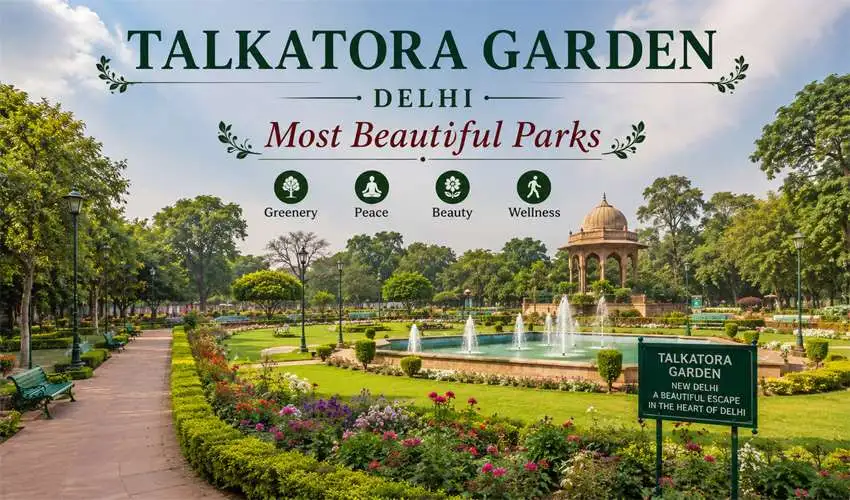
Delhi is a city of contrasts — ancient monuments standing shoulder to shoulder with glass towers, chaotic bazaars yielding to unexpected pockets of quiet. Among those pockets, Talkatora Garden holds a special place. Tucked away near the President’s Estate and the Supreme Court of India, this elegant green expanse is one of the capital’s most cherished parks — and yet, compared to the tourist crowds that throng Lodhi Garden or India Gate lawns, it remains beautifully unhurried. For those who know it, Talkatora Garden is nothing short of a hidden treasure in the heart of New Delhi.
A Name Rooted in History
The name “Talkatora” is evocative and curious. It translates roughly to “a shallow bowl of oil” or “a pond of oil” in Hindi, and it traces back to a historic reservoir — a natural depression that once collected rainwater and formed a seasonal lake in this part of the city. During the Mughal era, this landscape was developed as a garden retreat, and the site grew in significance over the centuries.
Some historians connect the garden to the battle of Talkatora fought in 1737 between the Marathas and the Mughals, marking the site as ground embedded in the political drama of pre-colonial Delhi. Whether or not the exact battlefield overlaps with today’s park, the name carries the weight of layered history — which only deepens the experience of walking through it.
Location and Accessibility
Talkatora Garden is located in the heart of Lutyens’ Delhi, close to Connaught Place, the Parliament House, and Rashtrapati Bhavan. Its address falls within the prestigious RML Hospital and Supreme Court neighbourhood, making it a surprisingly accessible urban retreat.
The nearest metro station is Patel Chowk on the Yellow Line, from where the garden is just a short walk or auto-rickshaw ride away. Given its central location, it can easily be combined with visits to other landmarks such as Jantar Mantar, Gurudwara Bangla Sahib, or the National Museum, making it an ideal stop on any Delhi itinerary.
Timings and Entry
The garden is open to visitors every day except Mondays. It welcomes guests from early morning — typically around 5:00 AM — until 8:00 PM, allowing both early risers seeking a morning walk and evening visitors looking for a quiet sunset stroll to enjoy the space. Entry to the garden itself is free of charge, making it one of Delhi’s most accessible public green spaces.
The Rose Garden: A Floral Masterpiece
One of the most celebrated features of Talkatora Garden is its magnificent rose garden. Spread across a significant portion of the park, it is home to hundreds of varieties of roses — from classic red velvets and delicate whites to rare hybrid blooms in shades of coral, peach, and lavender. The roses are meticulously maintained by the horticulture department and are at their breathtaking best between late January and March, when the Delhi winter loosens its grip and the blooms come alive in full colour.
During this season, the garden hosts the Delhi Flower Show, an annual event that draws thousands of visitors, garden enthusiasts, horticulturists, and families. It is a sensory celebration — the sight of endless blooms against manicured lawns, the soft fragrance carried on cool morning air, and the buzz of bees and butterflies. The flower show typically features competitive displays, rare plant exhibitions, and educational stalls, and is eagerly anticipated each year.
Landscape and Green Spaces
Beyond the rose garden, Talkatora Garden is a well-designed landscape of wide green lawns, tree-lined pathways, decorative fountains, and open spaces that invite lingering. Tall trees — including neem, ashoka, peepal, and seasonal flowering species — provide generous shade throughout the park, making it comfortable even during warmer months.
The garden’s layout reflects thoughtful horticultural planning. Winding paths lead visitors through different sections — from shaded glades perfect for reading or quiet reflection, to open lawns where families spread out on weekend afternoons. The symmetry and order of the plantings give the garden a calm, almost meditative quality that stands in striking contrast to the city noise just beyond its walls.
The presence of a small lake or water feature within the grounds adds another dimension to the park’s character. The sound of water, the ripple of light across the surface, and the occasional flutter of birds around it all contribute to the garden’s restorative atmosphere.
The Talkatora Indoor Stadium
Within the garden complex sits the Talkatora Indoor Stadium, a significant sporting and cultural venue. Built in 1982 for the Asian Games, the stadium has hosted countless national and international events — boxing championships, wrestling tournaments, kabaddi competitions, and cultural programmes. It seats several thousand spectators and remains one of Delhi’s key indoor arenas.
The presence of the stadium adds an active, energetic dimension to the garden precinct. On most mornings and evenings, athletes and coaches can be seen heading in and out of the facility, while visitors to the garden enjoy the greenery just outside. It is a thoughtful coexistence of sport and nature in one compact urban space.
A Haven for Morning Walkers and Fitness Enthusiasts
Like most of Delhi’s parks, Talkatora Garden comes alive in the early hours. Morning walkers, joggers, yoga practitioners, and elderly residents who seek the gentle ritual of a daily constitutional gather here from the moment the gates open. The paths are wide and well-maintained, and the tree canopy keeps the air noticeably cooler than the streets outside.
For residents of the surrounding neighbourhoods — Gole Market, Mandir Marg, and the government housing colonies nearby — the garden serves as a daily sanctuary. Friendships are built on these walking tracks, health routines are kept, and the small rituals of morning life play out quietly against a backdrop of birdsong and dew-covered grass.
Birdwatching and Biodiversity
Nature lovers will find Talkatora Garden surprisingly rewarding. The mix of mature trees, water bodies, and open lawn creates a layered habitat that attracts a variety of bird species. Common residents and visitors include rose-ringed parakeets, purple sunbirds, common mynas, spotted doves, black kites, and various bulbul species. During the winter months, migratory birds also pass through, offering birdwatchers occasional rewarding surprises.
The garden’s biodiversity extends to butterflies, which are drawn in large numbers to the flowering plants, especially during spring. Simply sitting quietly on a bench with a cup of chai from the nearby vendors and watching the movement of wings around the rose bushes is one of those quietly perfect urban experiences Delhi has to offer.
Photography and Creative Pursuits
With its photogenic rose beds, sculpted fountains, ornamental arches, and changing seasonal colour, Talkatora Garden is a favourite with photographers — amateur and professional alike. The garden has served as a backdrop for wedding shoots, fashion photography, student projects, and nature photography portfolios. The quality of light in the early morning hours, when a low sun filters through the trees and catches the dew on rose petals, is especially prized.
Tips for Visitors
To make the most of a visit to Talkatora Garden, a few practical tips are worth keeping in mind. Early mornings between 6:00 AM and 8:00 AM offer the most pleasant experience, with cooler temperatures, softer light, and a quieter atmosphere. The best time of year to visit is between October and March, when the Delhi climate is at its most agreeable and the garden is in full bloom. Wearing comfortable walking shoes is advisable, as the paths extend across a sizeable area. Visitors should also be mindful that the garden is a public space — maintaining cleanliness and respecting the plantings ensures that the beauty is preserved for everyone.
Conclusion
In a city that can sometimes feel relentless in its pace and scale, Talkatora Garden is an invitation to slow down. It is a place where history seeps quietly through the soil, where seasonal flowers remind us of nature’s reliable rhythms, and where the simple act of walking beneath trees becomes a small act of restoration. Whether you are a Delhiite seeking a daily green escape or a traveller looking for a less-crowded side of the capital, Talkatora Garden rewards every visit with something unhurried, beautiful, and genuinely memorable.